CONNECTING RESEARCH, POLICY, AND PRACTICE
THROUGH SHIFTING PARADIGMS IN PUBLIC EDUCATION
The landscape of public education is constantly shifting, navigating enduring and emerging issues while integrating new technologies, innovations, and evidence-based practices. To help PK-12 schools adapt to these changes and support positive outcomes in the communities that they serve, it is critical to connect across educational research, policy, and practice. The Metropolitan Educational Research Consortium (MERC) is a longstanding partnership between the School of Education at Virginia Commonwealth University and PK-12 school divisions in the metropolitan Richmond region. The MERC Summit is its annual gathering of key stakeholders who come together to collaborate around some of the most complex issues and exciting ideas in public education.
The goals of the summit are:
1. To offer interactive sessions where educational practitioners, researchers, and policymakers can learn together and collaborate on strategies to address prominent issues in public schools.
2. To explore innovative approaches to supporting K-12 students, educators, and families.
3. To learn from locally-developed research exploring trends, outcomes, and recommendations specific to metropolitan Richmond schools.
4. To leverage the benefits of research-practice partnerships between universities and K-12 public school systems by forging meaningful connections between stakeholders.
The summit format will focus on collaborative sessions where attendees are invited to actively contribute their ideas and expertise. Lunch will be provided. Participants will receive a certificate for 8 contact hours for continuing education credit.
THROUGH SHIFTING PARADIGMS IN PUBLIC EDUCATION
The landscape of public education is constantly shifting, navigating enduring and emerging issues while integrating new technologies, innovations, and evidence-based practices. To help PK-12 schools adapt to these changes and support positive outcomes in the communities that they serve, it is critical to connect across educational research, policy, and practice. The Metropolitan Educational Research Consortium (MERC) is a longstanding partnership between the School of Education at Virginia Commonwealth University and PK-12 school divisions in the metropolitan Richmond region. The MERC Summit is its annual gathering of key stakeholders who come together to collaborate around some of the most complex issues and exciting ideas in public education.
The goals of the summit are:
1. To offer interactive sessions where educational practitioners, researchers, and policymakers can learn together and collaborate on strategies to address prominent issues in public schools.
2. To explore innovative approaches to supporting K-12 students, educators, and families.
3. To learn from locally-developed research exploring trends, outcomes, and recommendations specific to metropolitan Richmond schools.
4. To leverage the benefits of research-practice partnerships between universities and K-12 public school systems by forging meaningful connections between stakeholders.
The summit format will focus on collaborative sessions where attendees are invited to actively contribute their ideas and expertise. Lunch will be provided. Participants will receive a certificate for 8 contact hours for continuing education credit.
Location
Tomahawk Creek Middle School
1600 Learning Pl Loop, Midlothian, VA 23114
Chesterfield County Public Schools
1600 Learning Pl Loop, Midlothian, VA 23114
Chesterfield County Public Schools
Date & Time
Thursday, June 13, 2024, 9:00 AM - 5:00 PM
(check in 8:00-9:00)
(check in 8:00-9:00)
SCHEDULE
8:00-9:00
CHECK-IN
Grab your name tag, a program, and a cup of coffee to start your day.
9:00-10:15
WELCOME AND STUDENT PANEL
Welcome to the 2024 MERC Summit! In this opening session we will discuss our theme of Connecting Research, Policy, and Practice Through Shifting Paradigms in Public Education and talk about what to expect for the rest of the day. We will then hear from a panel of graduates from the class of 2024 to help ground our conversations throughout the rest of the Summit.
10:30-11:45
BREAKOUT ONE
11:45-12:45
LUNCH
12:45-2:00
BREAKOUT TWO
2:15-3:30
BREAKOUT THREE
3:45-5:00
BREAKOUT FOUR
WELCOME/OPENING STUDENT PANEL
9:00-10:15
9:00-10:15
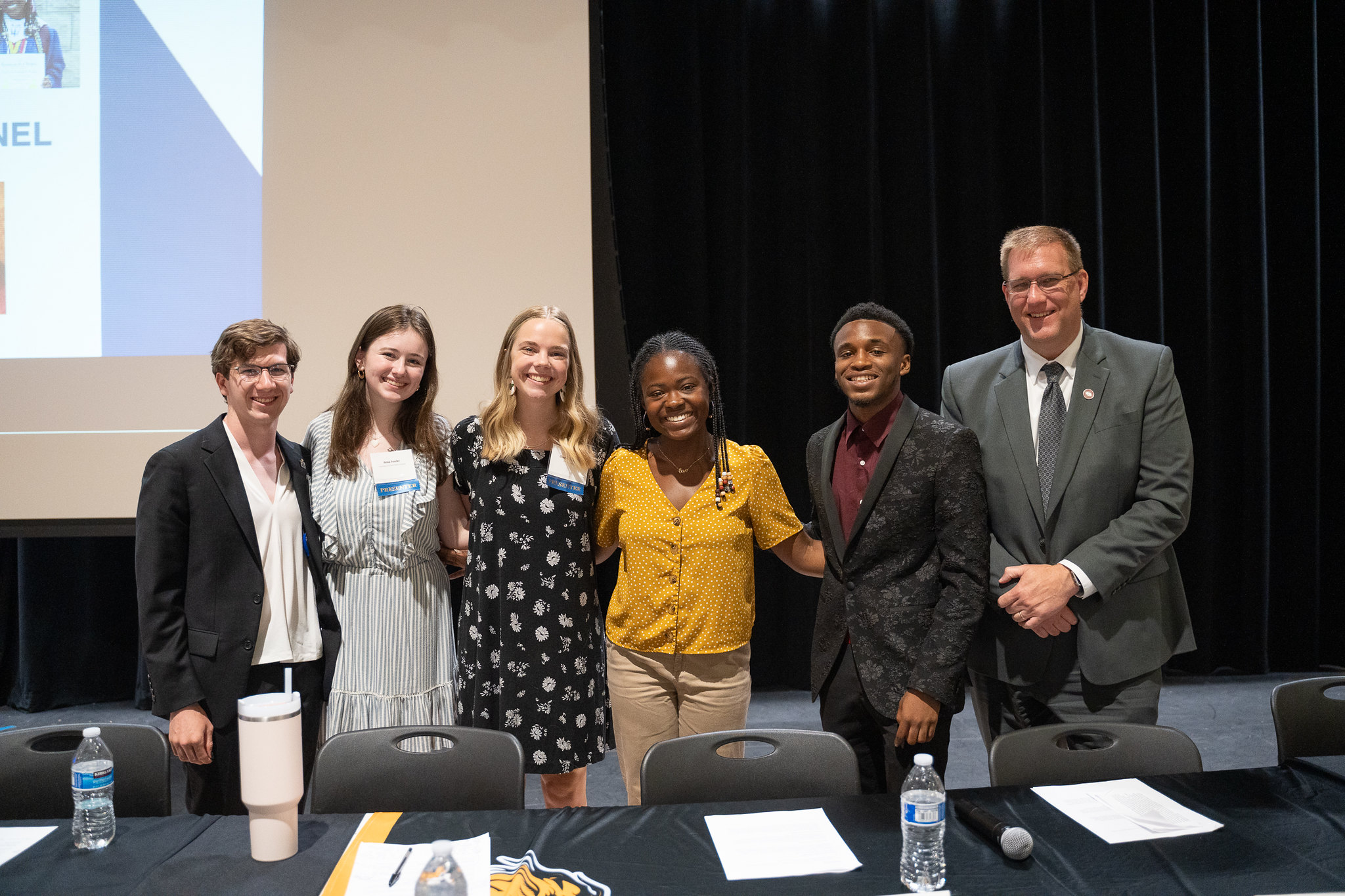
WELCOME TO THE 2024 MERC SUMMIT!
AUDITORIUM
VCU School of Education Interim Dean Kathleen Rudasill, Henrico County Public Schools Director of Research, Assessment, and Education (and MERC PPC Chair) Tiffany Hinton, and MERC Director David Naff offer welcome remarks to the 2024 MERC Summit, along with a brief overview of what to expect for the day.
CLASS OF 2024 STUDENT PANEL
A panel of recent graduates from Chesterfield, Goochland, Hanover, Henrico, and Richmond Public Schools (the five MERC school divisions) will reflect on their experiences as they relate to the broader themes of our program and share their vision for public education and help provide a foundation for our discussions for the rest of the MERC Summit. The panel will be moderated by Dr. Merv Daugherty, Superintendent of Chesterfield County Public Schools.
Kai Ward
CHESTERFIELD

Kendra Martinez
GOOCHLAND

Nuria Keel
HANOVER
Hunter Ford
HENRICO

Alex Kremsreiter
RICHMOND

Keyari Story
RICHMOND
Dr. Merv Daugherty
CHESTERFIELD SUPERINTENDENT (PANEL MODERATOR)
BREAKOUT ONE
10:30-11:45
10:30-11:45
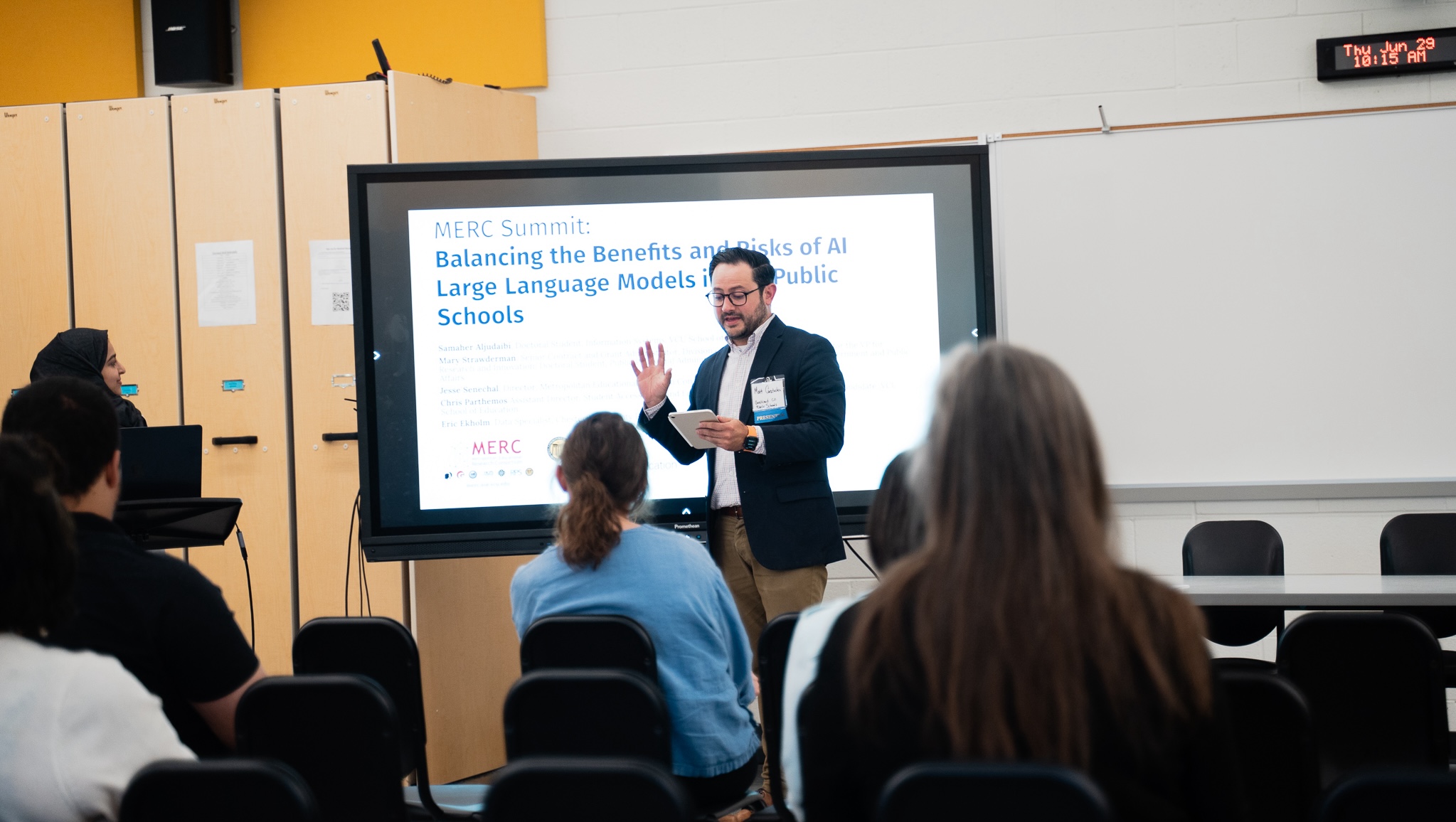
Session 1. Hanover Action Research Team (HART)
AUDITORIUM
The Hanover Action Research Team (HART) is designed to support teacher leadership in the areas of research and data use. The goals of the HART program are: (1) to build an understanding of the theory and practice of school-based action research, (2) to develop specific research skills for use in teacher leaders’ action research work, (3) to support teacher leaders as they engage in individual or collaborative action research cycles within the context of their classrooms and schools, and (4) to assist teacher leaders with the dissemination of findings from their action research studies among their peers within their schools and school divisions, as well as through the broader professional and academic research community. This session will include three presentations by teacher researchers from Hanover County.
#OWLStrong: Voice, Choice, Relationships
Nena Foster-Pritchard, Hanover County Public Schools
What has the biggest impact on student engagement? What do students wish for more of in any class? This presentation will share the results of a teacher action research study on student engagement at the Hanover Online School. The study found that students want more responsibility for their own learning, which can be reached through choice, voice, and relationships.
What has the biggest impact on student engagement? What do students wish for more of in any class? This presentation will share the results of a teacher action research study on student engagement at the Hanover Online School. The study found that students want more responsibility for their own learning, which can be reached through choice, voice, and relationships.
Motivating and Engaging Reluctant Math Learners
Laci Lizarraga, Hanover County Public Schools
This teacher action research project looks specifically at students who “fall through the cracks” in math class, focusing on fostering cognitive engagement and motivation. While no one method works all the time, this project shows that a commitment to flexibility, variety, and student input can engage these students over time.
Takeaways: 1) Action research conducted to solve a problem in a single classroom can have applications that are far reaching. 2) There is no “magic bullet” strategy that will work for every teacher every time in every classroom. Flexibility, variety, and in depth knowledge of your specific students is the key to engaging them. 3) Every learner can be engaged and attitudes towards math and learning can and will change.
This teacher action research project looks specifically at students who “fall through the cracks” in math class, focusing on fostering cognitive engagement and motivation. While no one method works all the time, this project shows that a commitment to flexibility, variety, and student input can engage these students over time.
Takeaways: 1) Action research conducted to solve a problem in a single classroom can have applications that are far reaching. 2) There is no “magic bullet” strategy that will work for every teacher every time in every classroom. Flexibility, variety, and in depth knowledge of your specific students is the key to engaging them. 3) Every learner can be engaged and attitudes towards math and learning can and will change.
Reimagining Common Planning with Patriot Learning Teams
Lauren Davis, Hanover County Public Schools
This teacher action research project explored restructuring common planning periods at Patrick Henry High School under the Professional Learning Community model to foster effective educator collaboration crucial for student success. The restructured model aligned with PLC principles for continuous improvement, data-driven practices, and shared commitment to learning.
Takeaways: 1) In order for a school PLC to be effective, schools must invest time and effort into training and supporting common planning teams. 2) The same approaches do not work for all teachers and all teams. Teachers should have a voice in the structure of their team. 3) Action research can be used to examine and strengthen existing systems in schools (in this case, the PLC model)
This teacher action research project explored restructuring common planning periods at Patrick Henry High School under the Professional Learning Community model to foster effective educator collaboration crucial for student success. The restructured model aligned with PLC principles for continuous improvement, data-driven practices, and shared commitment to learning.
Takeaways: 1) In order for a school PLC to be effective, schools must invest time and effort into training and supporting common planning teams. 2) The same approaches do not work for all teachers and all teams. Teachers should have a voice in the structure of their team. 3) Action research can be used to examine and strengthen existing systems in schools (in this case, the PLC model)
SESSION CHAIR
Jesse Senechal, Institute for Collaborative Research and Evaluation (VCU)
Session 2. Talent Unleashed: Fostering Student Ability and Self-Directed Growth
CHORUS ROOM
Cultivating Brilliance: Talent Development for Gifted Students in Title I Schools
Jennifer Conlee, Henrico County Public Schools; Richard Ashburn, Henrico County Public Schools; Jessica Harris, Henrico County Public Schools
Join us to explore equity-centered Talent Development tactics, fostering diverse strengths, and maximizing community support in Title I Communities. Learn collaborative strategies, resourceful tips, and inclusive efforts that nurture every mind, ignite curiosity, and cultivate brilliance.
Takeaways: 1) Maximizing Resources: Identify creative strategies and approaches to design and implement talent development programs that leverage limited resources effectively. This could include leveraging existing infrastructure, partnerships, and community resources to provide enriching experiences for students without extensive financial investment. 2) Advocacy and Inclusion: Learn how to advocate for the needs of gifted students and foster an inclusive school culture that recognizes and nurtures diverse talents. This may involve implementing policies and practices that ensure equitable access to opportunities for all students, regardless of background or ability. 3) Building Collaborative Communities: Develop skills and strategies for building strong partnerships and collaboration between families, educators, and other stakeholders in the community to enhance enrichment opportunities for students. This could involve organizing community events, fostering open communication channels, and establishing shared goals and objectives to support student development.
Join us to explore equity-centered Talent Development tactics, fostering diverse strengths, and maximizing community support in Title I Communities. Learn collaborative strategies, resourceful tips, and inclusive efforts that nurture every mind, ignite curiosity, and cultivate brilliance.
Takeaways: 1) Maximizing Resources: Identify creative strategies and approaches to design and implement talent development programs that leverage limited resources effectively. This could include leveraging existing infrastructure, partnerships, and community resources to provide enriching experiences for students without extensive financial investment. 2) Advocacy and Inclusion: Learn how to advocate for the needs of gifted students and foster an inclusive school culture that recognizes and nurtures diverse talents. This may involve implementing policies and practices that ensure equitable access to opportunities for all students, regardless of background or ability. 3) Building Collaborative Communities: Develop skills and strategies for building strong partnerships and collaboration between families, educators, and other stakeholders in the community to enhance enrichment opportunities for students. This could involve organizing community events, fostering open communication channels, and establishing shared goals and objectives to support student development.
The Importance of Self-Determination for All Students in the Commonwealth
Richard Chapman, Virginia Commonwealth University
This presentation will discuss self-determination from the lens of self-determination theory and causal agency theory. Strategies will be discussed to increase self-determination in all students, with a particular emphasis on students with disabilities that have significant support needs.
Takeaways: 1) Self-determination increases educational outcomes and quality of life for all students
2) All students need access to interventions that support self-determination, especially students with intensive support needs. 3) When students set self-determined goals they will become the architects of their lives.
This presentation will discuss self-determination from the lens of self-determination theory and causal agency theory. Strategies will be discussed to increase self-determination in all students, with a particular emphasis on students with disabilities that have significant support needs.
Takeaways: 1) Self-determination increases educational outcomes and quality of life for all students
2) All students need access to interventions that support self-determination, especially students with intensive support needs. 3) When students set self-determined goals they will become the architects of their lives.
Understanding the Role of Out-of-School Programming in Urban School Systems in a Post-COVID Context
Sean Miller, Boys & Girls Clubs of Metro Richmond; Crystal Bell, Virginia Commonwealth University, Kiana Bradford, Virginia Commonwealth University, LaTonja Wright, Virginia Commonwealth University
This presentation will explore how the work of out-of-school time (OST) providers has changed since the COVID-19 pandemic, particularly in urban school systems. It will include an overview of OST programming before and after the onset of the pandemic in metropolitan Richmond as well as a discussion of relevant research, policy, and data trends summarized in a MERC research and policy brief.
Takeaways: 1) Participants will learn about trends related to OST programming before and after COVID-19, 2) Participants will gain a better understanding of the services that OST provides to urban school communities, 3) Participants will learn how they can best partner with OST providers in the Richmond community to support the academic, social, and emotional wellbeing of students in our region.
This presentation will explore how the work of out-of-school time (OST) providers has changed since the COVID-19 pandemic, particularly in urban school systems. It will include an overview of OST programming before and after the onset of the pandemic in metropolitan Richmond as well as a discussion of relevant research, policy, and data trends summarized in a MERC research and policy brief.
Takeaways: 1) Participants will learn about trends related to OST programming before and after COVID-19, 2) Participants will gain a better understanding of the services that OST provides to urban school communities, 3) Participants will learn how they can best partner with OST providers in the Richmond community to support the academic, social, and emotional wellbeing of students in our region.
SESSION CHAIR
Cindy Sinanian, Richmond Public Schools
Session 3. Responsive Approaches to Meeting the Diverse Behavioral Needs of Students
MEDIA CENTER
Supporting Challenging Behaviors: A Systematic Plan for When Tier 1 Isn’t Enough
Allie Parsons, Chesterfield County Public Schools; Blair Burnett, Chesterfield County Public Schools; Rachel Mutnick, Chesterfield County Public Schools; Teylor Burke, Chesterfield County Public Schools
Despite best efforts, does student behavior feel overwhelming by October? Are the same core staff supporting all students with the most challenging behaviors? From the creation of a logic model to gamifying training, we share how we collaborated across specialities to create behavioral support systems in Chesterfield County Public Schools.
Takeaways: 1) School-based behavioral systems work should be done as a team to make sustainable, meaningful change 2) Cross-departmental collaboration can be helpful in a division’s messaging around behavior supports 3) How to create an intentional, methodical plan for division-level support of student behavior systems that is rooted in research and focused on outcomes
Despite best efforts, does student behavior feel overwhelming by October? Are the same core staff supporting all students with the most challenging behaviors? From the creation of a logic model to gamifying training, we share how we collaborated across specialities to create behavioral support systems in Chesterfield County Public Schools.
Takeaways: 1) School-based behavioral systems work should be done as a team to make sustainable, meaningful change 2) Cross-departmental collaboration can be helpful in a division’s messaging around behavior supports 3) How to create an intentional, methodical plan for division-level support of student behavior systems that is rooted in research and focused on outcomes
Behavior Coaching in Action - Tier 2 Behavior Support
Lisa Winn, Hanover County Public Schools; Tara Burkhead, Hanover County Public Schools
Behavior Coaches in Hanover County support Tier 1 systems that support all students, and they build teacher capacity to prevent and respond to difficult behavior in the classroom. These coaches have also found that they can play an integral role in building a sustainable and effective Tier 2 system in their schools. Join us to look at a Tier 2 Check In Check Out model, and the data that tells the story of this work.
Takeaways: 1) Model of a Phase Progression Tier 2 Check In Check Out System 2) Resources that support this Tier 2 system are linked throughout to include: Decision Making Rules, Team Agendas, Score Cards, etc. 3) Data Analysis Model that helps dissect the effectiveness of this system
Behavior Coaches in Hanover County support Tier 1 systems that support all students, and they build teacher capacity to prevent and respond to difficult behavior in the classroom. These coaches have also found that they can play an integral role in building a sustainable and effective Tier 2 system in their schools. Join us to look at a Tier 2 Check In Check Out model, and the data that tells the story of this work.
Takeaways: 1) Model of a Phase Progression Tier 2 Check In Check Out System 2) Resources that support this Tier 2 system are linked throughout to include: Decision Making Rules, Team Agendas, Score Cards, etc. 3) Data Analysis Model that helps dissect the effectiveness of this system
SESSION CHAIR
Brian Maltby, Hanover County Public Schools
Session 4. Practical Applications of Artificial Intelligence to Enhance Student Engagement and Outcomes
BAND ROOM
Bridging the Research-to-Practice Gap Using Al-Enabled Tools and University/District Partnerships
Elizabeth Davis, George Mason University; Seth B. Hunter, George Mason University
We will discuss a collaboration between Virginia-based university faculty and local school divisions to use AI tools to move research to practice. This includes findings from a pilot study about AI for school improvement planning and emerging district partnerships to identify problems of practice to explore using AI and ML.
Takeaways: 1) Reimagining data-sharing partnerships between universities and districts 2) Exploring AI research with university and district partnerships 3) Using AI-enabled tools for school and district improvement plans
We will discuss a collaboration between Virginia-based university faculty and local school divisions to use AI tools to move research to practice. This includes findings from a pilot study about AI for school improvement planning and emerging district partnerships to identify problems of practice to explore using AI and ML.
Takeaways: 1) Reimagining data-sharing partnerships between universities and districts 2) Exploring AI research with university and district partnerships 3) Using AI-enabled tools for school and district improvement plans
Using AI Tools to Maximize Student Learning in K-12 Education
Moe Greene, Virginia Commonwealth University; Yaoying Xu, Virginia Commonwealth University "
This presentation explores the use of AI tools and provides strategies to optimize learning for multilingual students in K-12 education, particularly in STEM subject areas. The attendees will reflect on how AI-leading environments can shape their teaching practices and instructional strategies.
Takeaways: 1) Learn about AI tools, techniques, and differentiated methods 2) Optimize learning outcomes through leading AI environments 3) Reflect on how AI tools can shape their teaching practices and pedagogy
This presentation explores the use of AI tools and provides strategies to optimize learning for multilingual students in K-12 education, particularly in STEM subject areas. The attendees will reflect on how AI-leading environments can shape their teaching practices and instructional strategies.
Takeaways: 1) Learn about AI tools, techniques, and differentiated methods 2) Optimize learning outcomes through leading AI environments 3) Reflect on how AI tools can shape their teaching practices and pedagogy
What’s Really Real? K16 Resources for AI-Generated Images
Oscar Keyes, Virginia Commonwealth University; Kate Ogden, Virginia Commonwealth University
This sessions presents a research project about a curriculum called “What’s Really Real: AI & Photography." This arts-based curriculum aims to equip students/teachers with a nuanced understanding of the camera’s relationship with reality through creative experimentation and support them as they navigate an increasingly confusing media landscape of misinformation.
Takeaways: 1) Presents hands-on activites with AI-generated imagery on students' critical thinking skills, particularly concerning: identifying, analyzing, and understanding synthetic media, misinformation, and disinformation. 2) Show students examples and reflections on engaging with AI-generated imagery and traditional photography, capturing insights into their learning process and the development of their creative and analytical skills. 3) Share resources to assist teachers looking to integrate critical engagements with generative artificial intelligence in their classrooms.
This sessions presents a research project about a curriculum called “What’s Really Real: AI & Photography." This arts-based curriculum aims to equip students/teachers with a nuanced understanding of the camera’s relationship with reality through creative experimentation and support them as they navigate an increasingly confusing media landscape of misinformation.
Takeaways: 1) Presents hands-on activites with AI-generated imagery on students' critical thinking skills, particularly concerning: identifying, analyzing, and understanding synthetic media, misinformation, and disinformation. 2) Show students examples and reflections on engaging with AI-generated imagery and traditional photography, capturing insights into their learning process and the development of their creative and analytical skills. 3) Share resources to assist teachers looking to integrate critical engagements with generative artificial intelligence in their classrooms.
SESSION CHAIR
Matt Caratachea, Goochland County Public Schools
BREAKOUT TWO
12:45-2:00
12:45-2:00
Session 5. Supporting Tomorrow's Innovators Through STEM-Based Learning
AUDITORIUM
Computing in the Commonwealth: An Environmental Scan and Consensus-Based Framework for Understanding Virginia’s Specialized Secondary Computing Education Opportunities
James Carrigan, Virginia Commonwealth University; Jon Seth Graham, Virginia Commonwealth University; Amy Corning, Virginia Commonwealth University; Jonathan D. Becker, Virginia Commonwealth University; Keisha Tennessee, Virginia Department Of Education "
The study presented here is part of a larger study of the landscape of specialized computer science or information technology (CS/IT) programs in Virginia, carried out in partnership with the Virginia Department of Education (VDOE). Specifically, the research examined consensus among CS experts on common elements of CS/IT programs.
Takeaways: 1) Participants will better understand the conceptual and methodological challenges involved in collecting data in spaces where key definitions are unspecified. 2) Participants will hear about how the Delphi Method was used to solicit an expert panel’s views of common elements of specialized CS/IT programs, and will learn about lack of consensus in prioritization of common elements and access to CS/IT programs for students. 3) Participants will gain a better understanding of the value of conducting applied research in partnership with a state agency.
The study presented here is part of a larger study of the landscape of specialized computer science or information technology (CS/IT) programs in Virginia, carried out in partnership with the Virginia Department of Education (VDOE). Specifically, the research examined consensus among CS experts on common elements of CS/IT programs.
Takeaways: 1) Participants will better understand the conceptual and methodological challenges involved in collecting data in spaces where key definitions are unspecified. 2) Participants will hear about how the Delphi Method was used to solicit an expert panel’s views of common elements of specialized CS/IT programs, and will learn about lack of consensus in prioritization of common elements and access to CS/IT programs for students. 3) Participants will gain a better understanding of the value of conducting applied research in partnership with a state agency.
Building STEM Learner Capacity Within the Changing Paradigm of Public Education
Singith Nawagamuwage Perera, Virginia Commonwealth University
The STEM learning capability of learners needs to be understood from a broader perspective than acquiring STEM knowledge. The STEM Learner Capacity Index is a model we propose that can be deployed by institutions, communities and policymakers in assessing the STEM learning capability of our learners.
Takeaways: 1) STEM learning is influenced by learners' ecological factors, systemic factors and learning skills of learners 2) There are assets and barriers within these ecological and systemic influences towards STEM education. Understanding these assets and barriers enables education policymakers, education management and curriculum designers to better understand intervention strategies that suit individual learners. 3) We are attempting to design a tool that can capture the cumulative impact of these assets and barriers, through which policymakers and education management can understand the learning capacity of STEM. We hope to help policymakers, educational institutions and communities regulate the dynamics of STEM learning through the use of the STEM capacity framework.
The STEM learning capability of learners needs to be understood from a broader perspective than acquiring STEM knowledge. The STEM Learner Capacity Index is a model we propose that can be deployed by institutions, communities and policymakers in assessing the STEM learning capability of our learners.
Takeaways: 1) STEM learning is influenced by learners' ecological factors, systemic factors and learning skills of learners 2) There are assets and barriers within these ecological and systemic influences towards STEM education. Understanding these assets and barriers enables education policymakers, education management and curriculum designers to better understand intervention strategies that suit individual learners. 3) We are attempting to design a tool that can capture the cumulative impact of these assets and barriers, through which policymakers and education management can understand the learning capacity of STEM. We hope to help policymakers, educational institutions and communities regulate the dynamics of STEM learning through the use of the STEM capacity framework.
SESSION CHAIR
Jamelle Simmons, Institute for Collaborative Research and Evaluation (VCU)
Session 6. Understanding Generational Sociopolitical Shifts in Public Education
CHORUS ROOM
Censored in School: Banned Books, An Undergraduate Course Overview
Kristen Brown, Virginia Commonwealth University
This presentation will be a brief overview of the course I taught this semester entitled, Censored in School: Banned Books. This course explores books that have been banned or challenged in America’s public schools, and unpacks and examines themes of why these books are targeted by certain groups.
Takeaways: 1) Examine patterns and themes that contribute to book bans in certain states. 2) Analyze culturally responsive approaches as it relates to literature and curriculum in schools. 3) Understand the importance of storytelling in voices of intersecting layered identities.
This presentation will be a brief overview of the course I taught this semester entitled, Censored in School: Banned Books. This course explores books that have been banned or challenged in America’s public schools, and unpacks and examines themes of why these books are targeted by certain groups.
Takeaways: 1) Examine patterns and themes that contribute to book bans in certain states. 2) Analyze culturally responsive approaches as it relates to literature and curriculum in schools. 3) Understand the importance of storytelling in voices of intersecting layered identities.
Proximity is Not Enough: The Current Impact of Brown vs the Board of Education
Jasmine Bates, Henrico County Public Schools
In this session, participants will discover the lasting impact of Brown vs Board of Education on today’s education system, examining historical context, systemic barriers, and solutions for racial equity. Engage in candid discussions on persisting disparities, policy changes, and best practices for transformative action.
Takeaways: 1) Gain insights into the historical significance of Brown vs. Board of Education and its relevance to contemporary public education 2) Understand the present landscape of racial disparities and inequities in education, emphasizing the experiences of black students, families, and educators of color 3) Explore actionable solutions in identifying and analyzing persistent barriers and challenges obstructing the path to racial equity in schools
In this session, participants will discover the lasting impact of Brown vs Board of Education on today’s education system, examining historical context, systemic barriers, and solutions for racial equity. Engage in candid discussions on persisting disparities, policy changes, and best practices for transformative action.
Takeaways: 1) Gain insights into the historical significance of Brown vs. Board of Education and its relevance to contemporary public education 2) Understand the present landscape of racial disparities and inequities in education, emphasizing the experiences of black students, families, and educators of color 3) Explore actionable solutions in identifying and analyzing persistent barriers and challenges obstructing the path to racial equity in schools
The Hill We Climb in Education: Moving Forward by Looking Back
Latorial Faison, Virginia State University
This qualitative research focused on the Black segregated education experience in rural Virginia and 25 individuals interviews telling stories, revealing the history and experience of Virginia's segregated education experience. Teachers will be exposed to various ways in which culturally responsive teaching took place during the Jim Crow Era. Students will benefit from the experiences of the past that still hold relevance today in terms of teaching and learning, school culture, and extra-curricular activity and involvement importance.
Takeaways: 1) Learn strategies to close achievement gaps for African American and other minority students 2) Learn the culturally relevant teacher pedagogy that Black educators employed to promote student success 3) Understand the crucial link between African American student serving schools and the African American community
This qualitative research focused on the Black segregated education experience in rural Virginia and 25 individuals interviews telling stories, revealing the history and experience of Virginia's segregated education experience. Teachers will be exposed to various ways in which culturally responsive teaching took place during the Jim Crow Era. Students will benefit from the experiences of the past that still hold relevance today in terms of teaching and learning, school culture, and extra-curricular activity and involvement importance.
Takeaways: 1) Learn strategies to close achievement gaps for African American and other minority students 2) Learn the culturally relevant teacher pedagogy that Black educators employed to promote student success 3) Understand the crucial link between African American student serving schools and the African American community
SESSION CHAIR
Meleah Ellison, Institute for Collaborative Research and Evaluation (VCU)
Session 7. Evidence-Based Decision Making: Leveraging Data to Inform Policy and Practice
MEDIA CENTER
The Childcare Infrastructure Development Index: Quantifying Central Appalachian Community Education Provision for its Youngest Citizens
Jaynae Wright, University of Virginia
Made intentionally as a tool for Southwest Virginia, the Childcare Infrastructure Development Index (CIDI) is the product of this research that serves as a tool for communities to easily measure how they are doing when it comes to meeting the childcare needs of its youngest citizens.
Takeaways: 1) Localities are diverse and no matter how rural, deserve to be empowered with localized data to inform policy and investments 2) Intuitive indexes can help practitioners, policymakers, and advocates engage meaningfully and forge solutions 3) Collaborative work should be iterative and developed alongside stakeholders and then intentionally disseminated back to communities
Made intentionally as a tool for Southwest Virginia, the Childcare Infrastructure Development Index (CIDI) is the product of this research that serves as a tool for communities to easily measure how they are doing when it comes to meeting the childcare needs of its youngest citizens.
Takeaways: 1) Localities are diverse and no matter how rural, deserve to be empowered with localized data to inform policy and investments 2) Intuitive indexes can help practitioners, policymakers, and advocates engage meaningfully and forge solutions 3) Collaborative work should be iterative and developed alongside stakeholders and then intentionally disseminated back to communities
What are the Hidden Steps: Unveiling the Student Success Formula from Raw Data to Outcomes
Chris Mitchell, Richmond Public Schools; Cate Robbins, Richmond Public Schools; Brian Eadeh, Richmond Public Schools; John Grove, Richmond Public Schools
Explore the transformation of student success through data-driven strategies in education. This session unveils how collaborative, evidence-based approaches to data challenges and storytelling can inspire change, fostering a culture of achievement and innovation for a brighter future for all students.
Takeaways: 1) Strategies for identifying and addressing data pain points to enhance educational growth. 2) The importance of collaboration and accountability in refining data systems for improved outcomes. 3) How crafting compelling narratives can motivate stakeholders to drive student success.
Explore the transformation of student success through data-driven strategies in education. This session unveils how collaborative, evidence-based approaches to data challenges and storytelling can inspire change, fostering a culture of achievement and innovation for a brighter future for all students.
Takeaways: 1) Strategies for identifying and addressing data pain points to enhance educational growth. 2) The importance of collaboration and accountability in refining data systems for improved outcomes. 3) How crafting compelling narratives can motivate stakeholders to drive student success.
Lessons Learned from Return-on-Investment Evaluations
Eric Ekholm, Chesterfield County Public Schools; Patty Fox, Chesterfield County Public Schools; Jenna Darby, Chesterfield County Public Schools
Evaluations play a critical role in educational decision making. In this session, we describe lessons learned from a series of return on investment evaluations we recently conducted. In doing so, we emphasize the importance of adopting a collaborative approach to evaluations.
Takeaways: 1) Participants will understand key tenets of collaborative evaluations. 2) Participants will understand how to establish logistical processes to support evaluations. 3) Participants will understand how to collaboratively frame the goals of an evaluation.
Evaluations play a critical role in educational decision making. In this session, we describe lessons learned from a series of return on investment evaluations we recently conducted. In doing so, we emphasize the importance of adopting a collaborative approach to evaluations.
Takeaways: 1) Participants will understand key tenets of collaborative evaluations. 2) Participants will understand how to establish logistical processes to support evaluations. 3) Participants will understand how to collaboratively frame the goals of an evaluation.
SESSION CHAIR
Paula Ogston-Nobile, Institute for Collaborative Research and Evaluation (VCU)
Session 8. Promoting Emotional Wellbeing at the Student, School, and Division Level
BAND ROOM
Navigating Trauma and Behavior: Insights for Addressing Student Challenges Post-Pandemic
Dana Ainsworth, Virginia Commonwealth University
The COVID-19 pandemic increased adversity and trauma among students. It is no coincidence that learning and behavioral challenges escalated in its wake. This session offers a brief primer on the relationship between trauma and behavior, a crucial step toward effectively addressing classroom challenges and reducing teacher burnout.
Takeaways: 1) Trauma is often overlooked in education policy and disciplinary practices. 2) Learning to recognize the symptoms of trauma is a critical part of addressing student behavior. 3) Penalizing students for trauma-driven behavior increases unwanted behavior rather than decreasing it.
The COVID-19 pandemic increased adversity and trauma among students. It is no coincidence that learning and behavioral challenges escalated in its wake. This session offers a brief primer on the relationship between trauma and behavior, a crucial step toward effectively addressing classroom challenges and reducing teacher burnout.
Takeaways: 1) Trauma is often overlooked in education policy and disciplinary practices. 2) Learning to recognize the symptoms of trauma is a critical part of addressing student behavior. 3) Penalizing students for trauma-driven behavior increases unwanted behavior rather than decreasing it.
Rise Above: Trauma-informed Social-Emotional Learning to Promote Productive Learning and Student Mental Health
Sunny Shin, Virginia Commonwealth University; Casey Corso, Virginia Commonwealth University; Diamyn Franklin, Virginia Commonwealth University; Eliza Mitchell, Virginia Commonwealth University
We live in a society where the health and life prospects of our students are plagued by widespread exposure to adverse childhood experiences, and its disruptive impacts on learning. This session provides an overview of trauma-informed school practices, their Impact on education, and strategies to build trauma-informed schools.
Takeaways: 1) Exposure to adverse childhood experiences can disrupt productive learning and negatively impact student mental health. 2) Trauma-informed practices are required to help your students manage stress and build resilience. 3) Trauma-informed, school-based interventions such as Rise Above can be effective in promoting student learning and preventing student mental health problems.
We live in a society where the health and life prospects of our students are plagued by widespread exposure to adverse childhood experiences, and its disruptive impacts on learning. This session provides an overview of trauma-informed school practices, their Impact on education, and strategies to build trauma-informed schools.
Takeaways: 1) Exposure to adverse childhood experiences can disrupt productive learning and negatively impact student mental health. 2) Trauma-informed practices are required to help your students manage stress and build resilience. 3) Trauma-informed, school-based interventions such as Rise Above can be effective in promoting student learning and preventing student mental health problems.
Hanover Go Green: Promoting and Measuring Division-Wide Student-Counselor Relationships
Karla Allen, Hanover County Public Schools; Shenita Williams, Virginia Commonwealth University; Mary-Catherine Kain, Virginia Commonwealth University
This presentation will provide an overview of "Go Green," a division-wide initiative in Hanover County Public Schools to help school counselors track relationships with students in their caseload (red, yellow, or green), with the goal of having all students "go green" by the end of elementary, middle, and high school. HCPS leaders will offer an overview of this initiative, and MERC researchers will share evaluation results about its perceived impacts in the division.
Takeaways: 1) Establishing trusting relationships are key in supporting the emotional wellbeing of students. 2) Systematically tracking data can help school counselors in their daily work and annual goal setting. 3) Research-practice partnerships can help PK-12 schools leverage evaluation data to understand the impacts of their programs.
This presentation will provide an overview of "Go Green," a division-wide initiative in Hanover County Public Schools to help school counselors track relationships with students in their caseload (red, yellow, or green), with the goal of having all students "go green" by the end of elementary, middle, and high school. HCPS leaders will offer an overview of this initiative, and MERC researchers will share evaluation results about its perceived impacts in the division.
Takeaways: 1) Establishing trusting relationships are key in supporting the emotional wellbeing of students. 2) Systematically tracking data can help school counselors in their daily work and annual goal setting. 3) Research-practice partnerships can help PK-12 schools leverage evaluation data to understand the impacts of their programs.
SESSION CHAIR
Brian Maltby, Hanover County Public Schools
Session 9. Enhancing Educator Evaluation, Self-Reflection, and Collaboration
MUSIC ROOM
Teacher Evaluation: Linking Supervision & Evaluation to Professional Learning & Improving Student Outcomes
Dr. Dana Gresham, Hanover County Public Schools; Dr. Meredith Parker, Hanover County Public Schools
In the extraordinarily busy days of Principals and other instructional leaders, the supervision and evaluation process can easily turn into a “check the box” process as opposed to one that builds the professional practice of educators. In this session you will learn how Hanover County Public Schools is working to change this scenario via a partnership between the Department of Human Resources and the Department of Instructional Leadership.
Takeaways: 1) Attendees will leave with a better understanding of the critical nature of the relationship between the Department of Human Resources and the Department of Instruction in leading the supervision and evaluation process. 2) Attendees will leave with a better understanding of supervision and evaluation as a growth process. 3) Attendees will leave with ideas for providing professional learning to those who supervise instruction.
In the extraordinarily busy days of Principals and other instructional leaders, the supervision and evaluation process can easily turn into a “check the box” process as opposed to one that builds the professional practice of educators. In this session you will learn how Hanover County Public Schools is working to change this scenario via a partnership between the Department of Human Resources and the Department of Instructional Leadership.
Takeaways: 1) Attendees will leave with a better understanding of the critical nature of the relationship between the Department of Human Resources and the Department of Instruction in leading the supervision and evaluation process. 2) Attendees will leave with a better understanding of supervision and evaluation as a growth process. 3) Attendees will leave with ideas for providing professional learning to those who supervise instruction.
Using Co-Design to Support New Teachers: Benefits and Lessons Learned with the New Teacher Schaberg Program
Georgia Heyward, Virginia Commonwealth University, Alex Amirato, Richmond Public Schools; Zenobia Brooks-Hanna, Virginia Commonwealth University; Singith Nawagamuwage Perera, Virginia Commonwealth University; Jesse Senechal, Virginia Commonwealth University
A local teacher induction program used co-design to improve how it supports new teachers. By including teacher and mentor perspectives, we hoped to make teacher supports more meaningful and effective. We will explore lessons learned from the co-design process, with a focus on how it helped us support new teachers.
Takeaways: 1) Participants will learn about potential benefits of using a Human Centered co-design process for education improvement and teacher learning 2) Participants will learn about the benefits we experienced using a Human Centered co-design model. 3) Participants will explore how these methods could be applied to their programs to meet improvement and learning goals
A local teacher induction program used co-design to improve how it supports new teachers. By including teacher and mentor perspectives, we hoped to make teacher supports more meaningful and effective. We will explore lessons learned from the co-design process, with a focus on how it helped us support new teachers.
Takeaways: 1) Participants will learn about potential benefits of using a Human Centered co-design process for education improvement and teacher learning 2) Participants will learn about the benefits we experienced using a Human Centered co-design model. 3) Participants will explore how these methods could be applied to their programs to meet improvement and learning goals
SESSION CHAIR
Jesse Senechal, Institute for Collaborative Research and Evaluation (VCU)
BREAKOUT THREE
2:15-3:30
2:15-3:30
Session 10. Theory Meets Practice: Navigating School Division Research Applications from Start to Finish
AUDitorium
Tiffany Hinton, Henrico County Public Schools; Patricia Fox, Chesterfield County Public Schools; Jennifer Whitson, Alexandria City Public Schools, Robert Veigel, Virginia Beach City Public Schools
This session offers graduate students and faculty a practical guide to conducting research in local school divisions, featuring a panel from Alexandria City, Chesterfield County, Henrico County, and Virginia Beach City Public Schools. Experts will share insights on application protocols and approval processes, highlight common pitfalls, and provide strategies for effective communication and alignment with school needs. Interactive discussions will encourage networking and facilitate a supportive research community.
Takeaways: 1) Learn how to smoothly navigate the research application and approval procedures within local school districts. 2) Gain insights on how to avoid common pitfalls in educational research, ensuring a more successful project outcome. 3) Discover opportunities to connect with fellow researchers and experts, enhancing collaboration and support for your work.
This session offers graduate students and faculty a practical guide to conducting research in local school divisions, featuring a panel from Alexandria City, Chesterfield County, Henrico County, and Virginia Beach City Public Schools. Experts will share insights on application protocols and approval processes, highlight common pitfalls, and provide strategies for effective communication and alignment with school needs. Interactive discussions will encourage networking and facilitate a supportive research community.
Takeaways: 1) Learn how to smoothly navigate the research application and approval procedures within local school districts. 2) Gain insights on how to avoid common pitfalls in educational research, ensuring a more successful project outcome. 3) Discover opportunities to connect with fellow researchers and experts, enhancing collaboration and support for your work.
Session 11. Preparing for the New Literacy Landscape
CHORUS ROOM
A Children's Literature Resource for Educators and Parents
Valerie Robnolt, Virginia Commonwealth University; Lisa Cipolletti, Virginia Commonwealth University
VCU's initiative to reduce textbook costs provides grants to faculty to write Open Educational Resources (OER) and the authors earned a grant to write a children’s literature textbook. We solicited feedback from a variety of potential users of the OER to continually improve this resource for teachers, librarians, and parents.
Takeaways: 1) Using Open Educational Resources (OER) benefit many students and educators. 2) A children's literature OER is a resource for educators and parents to support students' literacy development and love of reading. 3) Soliciting feedback from a variety of audiences can improve resources.
VCU's initiative to reduce textbook costs provides grants to faculty to write Open Educational Resources (OER) and the authors earned a grant to write a children’s literature textbook. We solicited feedback from a variety of potential users of the OER to continually improve this resource for teachers, librarians, and parents.
Takeaways: 1) Using Open Educational Resources (OER) benefit many students and educators. 2) A children's literature OER is a resource for educators and parents to support students' literacy development and love of reading. 3) Soliciting feedback from a variety of audiences can improve resources.
Understanding the Virginia Literacy Act
Valerie Robnolt, Virginia Commonwealth University; Candace Bechtold, Virginia Commonwealth University; Michael Crusco, Virginia Commonwealth University; Sharrie Merritte, Virginia Commonwealth University
The Virginia Literacy Act (VLA) is Virginia's legislative effort to assure that research-informed literacy practices are incorporated in literacy instruction in Virginia's public schools. This session will share key information from the MERC research and policy brief that was published about the VLA.
Takeaways: 1) Understand the policy landscape around the Virginia Literacy Act. 2) Understand evidence-based literacy instruction based on scientifically-based reading research. 3) Learn key takeaways and recommendations that will connect research, policy, and practice to meet the requirements of the most major paradigm shift in literacy instruction in the decades.
The Virginia Literacy Act (VLA) is Virginia's legislative effort to assure that research-informed literacy practices are incorporated in literacy instruction in Virginia's public schools. This session will share key information from the MERC research and policy brief that was published about the VLA.
Takeaways: 1) Understand the policy landscape around the Virginia Literacy Act. 2) Understand evidence-based literacy instruction based on scientifically-based reading research. 3) Learn key takeaways and recommendations that will connect research, policy, and practice to meet the requirements of the most major paradigm shift in literacy instruction in the decades.
SESSION CHAIR
David Naff, Metropolitan Educational Research Consortium (VCU)
Session 12. Maximizing Potential Through Innovative Student Engagement Strategies
MEDIA CENTER
Inclusive Talk and Innovative Tools: Transforming Conversations in Middle School Science Classrooms
Rachel Niemira, Virginia Commonwealth University; Kamil Hankour, Virginia Commonwealth University; Shannon Spacek, Chesterfield County Public Schools; Singith Nawagamuwage Perera, Virginia Commonwealth University; Christine Lee Bae, Virginia Commonwealth University
This session will highlight 1) example video clips of hybrid science discourse in middle school classrooms, 2) AI-driven TeachFX reports of science discourse lessons that highlight classroom talk features (e.g., questions asked, word clouds, key moments), and 3) science teachers and researchers insights into equitable classroom discourse practices via lesson study.
Takeaways: 1) Utilizing AI for Classroom Discourse Analysis: The session highlights the integration of innovative AI tool TeachFX to analyze and understand classroom discourse practices. This demonstrates a forward-thinking approach to leveraging technology to enhance teaching and learning experiences. 2) Promoting Equity in Science Education: By treating students' out-of-school funds of knowledge as assets to science learning, the session emphasizes the importance of inclusive discourse practices. This approach aims to create a more equitable learning environment where diverse student backgrounds are valued and integrated into classroom discussions. 3) Evidence-Based Strategies for Educational Equity: The session provides evidence-based strategies and insights gathered from a 5-year research-practice partnership. These practical adjustments in teaching strategies, informed by data-driven insights, can contribute to enhancing educational equity and improving teaching practices. Additionally, discussions about sustaining lesson study teams and professional learning communities offer valuable guidance for ongoing support beyond the duration of a grant project, highlighting the importance of long-term commitment to educational equity efforts.
This session will highlight 1) example video clips of hybrid science discourse in middle school classrooms, 2) AI-driven TeachFX reports of science discourse lessons that highlight classroom talk features (e.g., questions asked, word clouds, key moments), and 3) science teachers and researchers insights into equitable classroom discourse practices via lesson study.
Takeaways: 1) Utilizing AI for Classroom Discourse Analysis: The session highlights the integration of innovative AI tool TeachFX to analyze and understand classroom discourse practices. This demonstrates a forward-thinking approach to leveraging technology to enhance teaching and learning experiences. 2) Promoting Equity in Science Education: By treating students' out-of-school funds of knowledge as assets to science learning, the session emphasizes the importance of inclusive discourse practices. This approach aims to create a more equitable learning environment where diverse student backgrounds are valued and integrated into classroom discussions. 3) Evidence-Based Strategies for Educational Equity: The session provides evidence-based strategies and insights gathered from a 5-year research-practice partnership. These practical adjustments in teaching strategies, informed by data-driven insights, can contribute to enhancing educational equity and improving teaching practices. Additionally, discussions about sustaining lesson study teams and professional learning communities offer valuable guidance for ongoing support beyond the duration of a grant project, highlighting the importance of long-term commitment to educational equity efforts.
Esports: A Game Changer for Student Engagement
Jon Gregori, Henrico County Public Schools; Dr. Deia Champ, Henrico County Public Schools; Erin Daniel, Henrico Education Foundation
Explore how Esports transforms student engagement, skills, and career prospects in Henrico Middle Schools. We'll share outcomes from eighteen months of esports clubs across three schools and the latest research on scholastic Esports' benefits.
Takeaways: 1) Understand the foundational principles behind Scholastic Esports and its transformative impact on PK-12 education, including its influence on student engagement and sense of belonging. 2) Identify the key components of the 'Why, What, and How' of Esports integration in school environments, recognizing its significance as a valuable addition to educational settings. 3) Develop a compelling pitch to advocate for introducing Esports in your school or division, emphasizing its potential to enhance student engagement and foster a sense of belonging.
Explore how Esports transforms student engagement, skills, and career prospects in Henrico Middle Schools. We'll share outcomes from eighteen months of esports clubs across three schools and the latest research on scholastic Esports' benefits.
Takeaways: 1) Understand the foundational principles behind Scholastic Esports and its transformative impact on PK-12 education, including its influence on student engagement and sense of belonging. 2) Identify the key components of the 'Why, What, and How' of Esports integration in school environments, recognizing its significance as a valuable addition to educational settings. 3) Develop a compelling pitch to advocate for introducing Esports in your school or division, emphasizing its potential to enhance student engagement and foster a sense of belonging.
Using Street Data to Build Academic Optimism for Advanced Coursework
Andrea Herndon, Hanover County Public Schools
Shane Safir (2017) summarizes street data as the data that illuminate the experiences of those directly involved, which is different from satellite “big picture” data of test scores. Participants will walk through a street data protocol to start the conversation to grow a school culture of more equitable access to advanced coursework.
Takeaways: 1) Introduction to the culture of academic optimism 2) Understanding the value of street data 3) Adaptable data protocol for instructional teams
Shane Safir (2017) summarizes street data as the data that illuminate the experiences of those directly involved, which is different from satellite “big picture” data of test scores. Participants will walk through a street data protocol to start the conversation to grow a school culture of more equitable access to advanced coursework.
Takeaways: 1) Introduction to the culture of academic optimism 2) Understanding the value of street data 3) Adaptable data protocol for instructional teams
SESSION CHAIR
Matt Caratachea, Goochland County Public Schools
Session 13. Beyond Involvement: Honoring Families and Communities as Experts and Change Agents
Band room
Community-Engaged Research: Shifts in Processes, Practices, and Power
Cammie Justus-Smith, Virginia Commonwealth University; Meleah Ellison, Institute for Collaborative Research and Evaluation (VCU); Jesse Senechal, Institute for Collaborative Research and Evaluation (VCU); Karli Johansen, Virginia Commonwealth University; Georgia Heyward, Virginia Commonwealth University
In this session, team members from the Institute for Collaborative Research and Evaluation will define Community-Engaged Research (CEnR) and outline how CEnR benefits invested partners and constituents. Additionally, the team will share the Continuum of Community-Engaged Practices with an emphasis on democratizing the production and use of knowledge for social change.
Takeaways: 1) Attendees will gain a better understanding of how community-engaged research occurs on a multi-dimensional continuum of research and evaluation. 2) Attendees will gain a better understanding of how community-engaged research benefits all participants and constituents - community members, researchers, evaluators, institutions, and society as a whole. 3) Attendees will gain a better understanding of how operating in a community-engaged manner requires ongoing reflection and learning.
In this session, team members from the Institute for Collaborative Research and Evaluation will define Community-Engaged Research (CEnR) and outline how CEnR benefits invested partners and constituents. Additionally, the team will share the Continuum of Community-Engaged Practices with an emphasis on democratizing the production and use of knowledge for social change.
Takeaways: 1) Attendees will gain a better understanding of how community-engaged research occurs on a multi-dimensional continuum of research and evaluation. 2) Attendees will gain a better understanding of how community-engaged research benefits all participants and constituents - community members, researchers, evaluators, institutions, and society as a whole. 3) Attendees will gain a better understanding of how operating in a community-engaged manner requires ongoing reflection and learning.
Fostering Belonging and Resilience: The Evolution of the Mary and Frances Youth Center (MFYC) and RichmondYDN in Greater Richmond.
Dr. Misti Mueller, Mary and Francis Youth Center (VCU); Dr. Vaughn W. Garland, Mary and Francis Youth Center (VCU)
The session explores the growth of Virginia Commonwealth University's Mary and Frances Youth Center (MFYC) and its ties to Richmond region's youth and educators. Focused on sports, MFYC aims to foster belonging, bolstering youth well-being. RichmondYDN, housed within MFYC, offers vital training for youth educators, prioritizing culturally responsive professional growth.
Takeaways: 1) Participants will understand how the MFYC supports youth engagement through sports while catering to diverse interests and abilities, ensuring inclusivity and participation among the youth population. 2) Participants will recognize how the MFYC promotes positive youth development by fostering resilience, self-confidence, and social skills by participating in structured sports programs. 3) Participants will develop an appreciation for the value of having a youth focused center on a university campus that supports not only youth programming but also provides professional development for youth educators.
The session explores the growth of Virginia Commonwealth University's Mary and Frances Youth Center (MFYC) and its ties to Richmond region's youth and educators. Focused on sports, MFYC aims to foster belonging, bolstering youth well-being. RichmondYDN, housed within MFYC, offers vital training for youth educators, prioritizing culturally responsive professional growth.
Takeaways: 1) Participants will understand how the MFYC supports youth engagement through sports while catering to diverse interests and abilities, ensuring inclusivity and participation among the youth population. 2) Participants will recognize how the MFYC promotes positive youth development by fostering resilience, self-confidence, and social skills by participating in structured sports programs. 3) Participants will develop an appreciation for the value of having a youth focused center on a university campus that supports not only youth programming but also provides professional development for youth educators.
Exploring Family Engagement Supports and Barriers to Integrated Community Participation for Families With Autistic Child(ren)
Karli Johansen, Virginia Commonwealth University
The study examines family engagement for families with autistic child(ren) exploring support systems and barriers to community participation. Using Autistic Community Connectedness theory (Botha et al., 2022) and Modified Socioecological theory (Kim & Kwon, 2022), this study will use a Delphi study to analyze family experiences and explore implications.
Takeaways: 1) Comprehensive support systems for families with autistic children are needed to facilitate their integration into the community. It is crucial to understand both the support utilized by families and the barriers they encounter when accessing their community. 2) Involving families in research, such as through Delphi studies, to gain firsthand insights into their experience is important to show researchers value their perspectives. Families perspectives can inform the development of practices and policies to enhance community engagement for autistic children. 3) Results from this study may not only inform research agendas but also policy decisions and interventions. This study has the potential impact to promote inclusivity, accessibility, and positive outcomes for both parents and their autistic children within their communities.
The study examines family engagement for families with autistic child(ren) exploring support systems and barriers to community participation. Using Autistic Community Connectedness theory (Botha et al., 2022) and Modified Socioecological theory (Kim & Kwon, 2022), this study will use a Delphi study to analyze family experiences and explore implications.
Takeaways: 1) Comprehensive support systems for families with autistic children are needed to facilitate their integration into the community. It is crucial to understand both the support utilized by families and the barriers they encounter when accessing their community. 2) Involving families in research, such as through Delphi studies, to gain firsthand insights into their experience is important to show researchers value their perspectives. Families perspectives can inform the development of practices and policies to enhance community engagement for autistic children. 3) Results from this study may not only inform research agendas but also policy decisions and interventions. This study has the potential impact to promote inclusivity, accessibility, and positive outcomes for both parents and their autistic children within their communities.
SESSION CHAIR
Jesse Senechal, Institute for Collaborative Research and Evaluation (VCU)
BREAKOUT FOUR
3:45-5:00
3:45-5:00

Session 14. An Interactive Discussion of AI in K12 Education
MEDIA CENTER
Eric Ekholm, Chesterfield County Public Schools; Oscar Keyes, Virginia Commonwealth University; Jesse Senechal, Institute for Collaborative Research and Evaluation (VCU); Chris Parthemos, Virginia Commonwealth University; Mary Strawderman, Virginia Commonwealth University; Matt Caratachea, Goochland County Public Schools
Since the debut of ChatGPT in the fall of 2022, AI-powered apps have proliferated worldwide, including in education. In this interactive session, we invite attendees to discuss the ethics, policies, and practices of AI in K12 education.
Takeaways: 1) Participants will share ideas relating to AI ethics, policies, and practices in K12 settings 2) Participants will better understand common concerns around AI in K12 settings 3) Participants will better understand some of the opportunities/benefits of AI in K12 settings
Since the debut of ChatGPT in the fall of 2022, AI-powered apps have proliferated worldwide, including in education. In this interactive session, we invite attendees to discuss the ethics, policies, and practices of AI in K12 education.
Takeaways: 1) Participants will share ideas relating to AI ethics, policies, and practices in K12 settings 2) Participants will better understand common concerns around AI in K12 settings 3) Participants will better understand some of the opportunities/benefits of AI in K12 settings
Session 15. Preventing Harm: Strategies for Addressing Sexual Misconduct in PK-12 Schools
CHORUS ROOM
Towards Safer Schools: Insights from K-12 Administrators on Preventing Child Sexual Abuse (CSA)
Kim Halterman, Alleghany Highlands Public Schools; Melinda Snead-Johnson, Alleghany Highlands Public Schools; Emiola Oyefuga, Virginia Commonwealth University; Andrew Ortiz, Child USA; Charol Shakeshaft, Virginia Commonwealth University
This session draws on findings from interviews with K-12 administrators from Alleghany Highlands Public Schools. The session aims to generate dialogue on CSA prevention by amplifying the voices of educators in the field by sharing their perspectives, experiences, and challenges, and highlighting insights that can inform ongoing prevention efforts to create safer schools for all students.
Takeaways: 1) Participants will understand the challenges faced by school districts in developing solutions where there has been an incident of educator sexual misconduct. 2) Participants will understand the importance of proactive measures in preventing CSA in schools. 3) Participants will appreciate the importance of collaboration and evidence-based approaches in preventing CSA in schools.
This session draws on findings from interviews with K-12 administrators from Alleghany Highlands Public Schools. The session aims to generate dialogue on CSA prevention by amplifying the voices of educators in the field by sharing their perspectives, experiences, and challenges, and highlighting insights that can inform ongoing prevention efforts to create safer schools for all students.
Takeaways: 1) Participants will understand the challenges faced by school districts in developing solutions where there has been an incident of educator sexual misconduct. 2) Participants will understand the importance of proactive measures in preventing CSA in schools. 3) Participants will appreciate the importance of collaboration and evidence-based approaches in preventing CSA in schools.
The Power of School Counselors’ Collaboration, Advocacy, and Leadership in Preventing and Addressing Educator Sexual Misconduct
Abigail Conley, Virginia Commonwealth University; Emily Kitching, Virginia Commonwealth University; Emiola Oyefuga, Virginia Commonwealth University; Charol Shakeshaft, Virginia Commonwealth University; Kellie Carlyle, Virginia Commonwealth University
The role of school counselors is rooted in leadership and advocacy; therefore, training school counselors to recognize, address, and report educator sexual misconduct is critical. In this session, we will explore the school counselor’s role in recognizing, preventing, and addressing school employee sexual misconduct toward students.
Takeaways: 1) Participants will learn about educator sexual misconduct prevalence and risk factors, including identifying boundary crossing behaviors. 2) Participants will explore the role of school counselors in implementing educator sexual misconduct prevention and intervention programs. 3) Participants will brainstorm the leadership and advocacy roles they have related to educator sexual misconduct within their own communities. Potential strengths and barriers in individuals' current contexts will be discussed.
The role of school counselors is rooted in leadership and advocacy; therefore, training school counselors to recognize, address, and report educator sexual misconduct is critical. In this session, we will explore the school counselor’s role in recognizing, preventing, and addressing school employee sexual misconduct toward students.
Takeaways: 1) Participants will learn about educator sexual misconduct prevalence and risk factors, including identifying boundary crossing behaviors. 2) Participants will explore the role of school counselors in implementing educator sexual misconduct prevention and intervention programs. 3) Participants will brainstorm the leadership and advocacy roles they have related to educator sexual misconduct within their own communities. Potential strengths and barriers in individuals' current contexts will be discussed.
Safe Schools: Preventing Peer-To-Peer Sexual Misconduct in K-12 Schools
Leah Wiedenhoft, Henrico County Public Schools; Crystal Bell, VDOE's T/TAC at Virginia Commonwealth University; Beth Terrier, Henrico County Public Schools; Kris Herakovich-Curtis, VTSS at Virginia Commonwealth University
In our session, participants will collaborate and share as we examine the findings and recommendations from our descriptive study examining the needs of Title IX Coordinators and school administrators as they work to create safer schools by effectively processing and preventing peer-to-peer sexual harassment and assault.
Takeaways: 1) Increased understanding of Title IX Coordinators and school administrators needs as they work to address incidences of peer-to-peer sexual misconduct 2) New ideas about how to include students and families in the efforts to prevent sexual misconduct in schools 3) Improved understanding of what effective professional learning about safe schools and Title IX should include
In our session, participants will collaborate and share as we examine the findings and recommendations from our descriptive study examining the needs of Title IX Coordinators and school administrators as they work to create safer schools by effectively processing and preventing peer-to-peer sexual harassment and assault.
Takeaways: 1) Increased understanding of Title IX Coordinators and school administrators needs as they work to address incidences of peer-to-peer sexual misconduct 2) New ideas about how to include students and families in the efforts to prevent sexual misconduct in schools 3) Improved understanding of what effective professional learning about safe schools and Title IX should include
SESSION CHAIR
Meleah Ellison, Institute for Collaborative Research and Evaluation (VCU)
Session 16. Youth-Led Change: Strategies for Fostering and Honoring Students as Leaders
AUDITORIUM
Amplifying Student Voice: A Call to Incorporate Student Perspectives into Education Reform
Christina Tillery, Virginia Commonwealth University
Advocating student voice as pivotal in shaping education, an annual Student Town Hall at a local high school provided a platform for post-COVID-19 insights. Inspired by Youth Participatory Action Research, students become active in shaping policies for a more inclusive, equitable, and effective educational system.
Takeaways: 1) Empowerment of students as advocates for positive change within their educational environments. 2) Practical strategies for engaging students as partners in educational reform efforts will be shared, providing attendees with actionable steps to foster meaningful dialogue and collaboration with students. 3) Attendees will gain valuable insights into innovative methodologies for incorporating student voice in educational research, policy, and practice, drawing inspiration from Youth Participatory Action Research (YPAR) methodologies.
Advocating student voice as pivotal in shaping education, an annual Student Town Hall at a local high school provided a platform for post-COVID-19 insights. Inspired by Youth Participatory Action Research, students become active in shaping policies for a more inclusive, equitable, and effective educational system.
Takeaways: 1) Empowerment of students as advocates for positive change within their educational environments. 2) Practical strategies for engaging students as partners in educational reform efforts will be shared, providing attendees with actionable steps to foster meaningful dialogue and collaboration with students. 3) Attendees will gain valuable insights into innovative methodologies for incorporating student voice in educational research, policy, and practice, drawing inspiration from Youth Participatory Action Research (YPAR) methodologies.
Empowering At-Risk Youth: The Start on Success Program and its Impact on College and Career Readiness
Judy Averill, Virginia Commonwealth University; Kelly Ligon, [email protected], Virginia Commonwealth University; Susan McKelvey, Virginia Commonwealth University
Participants will increase their knowledge of the essential components that make Start on Success a highly quality work-based learning program. They will gain insight into the collaborative partnership between special education, Career and Technical Education, Vocational Rehabilitation, students, families, and businesses, and the research that is being conducted to demonstrate this model is an evidence-based practice.
Takeaways: 1) Acquire an understanding of the key elements that contribute to the success of the Start on Success work-based learning program. 2) Gain insight into the collaborative partnership between special education, Career and Technical Education, Vocational Rehabilitation, students, families, and businesses. 3) Learn about the preliminary results of ongoing research that aims to demonstrate the effectiveness of the Start on Success model as an evidence-based practice.
Participants will increase their knowledge of the essential components that make Start on Success a highly quality work-based learning program. They will gain insight into the collaborative partnership between special education, Career and Technical Education, Vocational Rehabilitation, students, families, and businesses, and the research that is being conducted to demonstrate this model is an evidence-based practice.
Takeaways: 1) Acquire an understanding of the key elements that contribute to the success of the Start on Success work-based learning program. 2) Gain insight into the collaborative partnership between special education, Career and Technical Education, Vocational Rehabilitation, students, families, and businesses. 3) Learn about the preliminary results of ongoing research that aims to demonstrate the effectiveness of the Start on Success model as an evidence-based practice.
Supporting Transition with Photovoice and Digital Employment Portfolios in Intensive Supports Classrooms
Molly Taylor, Virginia Commonwealth University; Richard Chapman, Virginia Commonwealth University; LaNeka Brown, Virginia Commonwealth University; Amanda Dailey, Richmond Public Schools; Tammy Sellers, Richmond Public Schools
To engage youth with IDD in transition planning, students in an Intensive Supports classroom participated in Photovoice and created digital employment portfolios. High school students will discuss their Photovoice experiences and how they use digital portfolios. Takeaways include resources for adapting portfolios and tools for translating research into community change.
Takeaways: 1) Hear from current high school students about their experiences with photovoice and see them present their digital portfolios. 2) Receive a sample template of a digital portfolio that teachers may adapt for their students with varying support needs. 3) Learn about our team’s approach to conducting community-based research that supports current students in their transition and employment, while also fostering community action for long-term transition support for youth with IDD in Richmond.
To engage youth with IDD in transition planning, students in an Intensive Supports classroom participated in Photovoice and created digital employment portfolios. High school students will discuss their Photovoice experiences and how they use digital portfolios. Takeaways include resources for adapting portfolios and tools for translating research into community change.
Takeaways: 1) Hear from current high school students about their experiences with photovoice and see them present their digital portfolios. 2) Receive a sample template of a digital portfolio that teachers may adapt for their students with varying support needs. 3) Learn about our team’s approach to conducting community-based research that supports current students in their transition and employment, while also fostering community action for long-term transition support for youth with IDD in Richmond.
SESSION CHAIR
Paula Ogston-Nobile, Institute for Collaborative Research and Evaluation (VCU)
Session 17. Brave Spaces: Cultivating Environments of Belonging and Restoration
band room
Young, Black & Off the Plantation: Creating Fugitive Spaces for Black Girls
Tiyacca Simms-Jones, Virginia Commonwealth University; Kiana Bradford, Virginia Commonwealth University; Ulunda Byers-Avery, Virginia Commonwealth University
Creating fugitive spaces for Black girls in white-centric educational spaces through exploration of historical and educational context of fugitive spaces, impact of language and building of community.
Takeaways: 1) Fugitive Space: Participants will gain understanding of fugitive spaces an cultivating them in academic space. 2) Language replacement: Participants will gain understanding of the use of affirming language to counteract negative language used describe and engage African American girls. 3) Community: Participants will gain understanding in building community for African American girls.
Creating fugitive spaces for Black girls in white-centric educational spaces through exploration of historical and educational context of fugitive spaces, impact of language and building of community.
Takeaways: 1) Fugitive Space: Participants will gain understanding of fugitive spaces an cultivating them in academic space. 2) Language replacement: Participants will gain understanding of the use of affirming language to counteract negative language used describe and engage African American girls. 3) Community: Participants will gain understanding in building community for African American girls.
A Path Toward Healing: Parent and Caregivers' Perspectives on the Work of Restorative Practice Richmond (RPR) at Martin Luther King, Jr. MS
Dr. Brandi M. Daniels, Virginia Commonwealth University
To address how key stakeholders experience restorative practices (RP), Restorative Practices Richmond (RPR) submitted a request for assistance (RFA) to Virginia Commonwealth University. This single case study examines how parents, caregivers, and community partners perceive school discipline and restorative practices and how this understanding supports restorative practices at Martin Luther King Middle School (MLK MS).
Takeaways: 1) The ability to identify key components of the Restorative Practices Richmond Program being offered at MLK MS. 2) An overview of findings and recommendations based on key stakeholders' feedback in this single case study. 3) Community resources and program buy-in factors for an all school model.
To address how key stakeholders experience restorative practices (RP), Restorative Practices Richmond (RPR) submitted a request for assistance (RFA) to Virginia Commonwealth University. This single case study examines how parents, caregivers, and community partners perceive school discipline and restorative practices and how this understanding supports restorative practices at Martin Luther King Middle School (MLK MS).
Takeaways: 1) The ability to identify key components of the Restorative Practices Richmond Program being offered at MLK MS. 2) An overview of findings and recommendations based on key stakeholders' feedback in this single case study. 3) Community resources and program buy-in factors for an all school model.
There's Power in the Pause: The Role of Mental Health Breaks in Black Women's Professional Journeys
Lauren N. Jackson, Jackson Consulting and Coaching Firm, LLC; Cleo Booker, Psy.D; Forge Health, Focus4U, LLC
Recognizing the challenges Black women educators face in the workforce, this session draws on research and practical insights to provide attendees with a deeper understanding of how intentional self-care pauses and mental health breaks can contribute to overall well-being, improved job satisfaction, and pave the way for sustained success for Black women.
Takeaways: 1) Gain a deeper understanding of the challenges impacting mental health and well-being, particularly for Black women in academia and across other industries. 2) Explore effective strategies and resources for promoting mental health and success among Black women in their respective fields. 3) Develop and strategize ways to integrate well-being strategies for Black women into one’s own professional work.
Recognizing the challenges Black women educators face in the workforce, this session draws on research and practical insights to provide attendees with a deeper understanding of how intentional self-care pauses and mental health breaks can contribute to overall well-being, improved job satisfaction, and pave the way for sustained success for Black women.
Takeaways: 1) Gain a deeper understanding of the challenges impacting mental health and well-being, particularly for Black women in academia and across other industries. 2) Explore effective strategies and resources for promoting mental health and success among Black women in their respective fields. 3) Develop and strategize ways to integrate well-being strategies for Black women into one’s own professional work.
SESSION CHAIR
David Naff, Metropolitan Educational Research Consortium (VCU)
Session 18. The Tight-Loose Paradox Around Instructional Models: Where Do I Stand as a Teacher Leader?
MUSIC room
Megan Babb, Henrico County Public Schools; Shannon Costley, Hopewell City Public Schools; Emily Ward, Chesterfield County Public Schools; Tricia Cook, Chesterfield County Public Schools
We have seen an increasing demand for teacher independent decision making (loose) and a decrease in the organizational support for instructional models that include collaborative PLCs and data-based decision making around shared instructional data (tight). From our seats--teachers, coaches, leads--we explore and reflect on how our actions impact this tight-loose paradox.
Takeaways: 1) Teacher collaboration is necessary for schools to be successful. 2) Teacher leadership is crucial in fostering collaborative efforts between teachers. 3) Understand the challenges faced by teacher leaders in creating and fostering these collaborative efforts.
We have seen an increasing demand for teacher independent decision making (loose) and a decrease in the organizational support for instructional models that include collaborative PLCs and data-based decision making around shared instructional data (tight). From our seats--teachers, coaches, leads--we explore and reflect on how our actions impact this tight-loose paradox.
Takeaways: 1) Teacher collaboration is necessary for schools to be successful. 2) Teacher leadership is crucial in fostering collaborative efforts between teachers. 3) Understand the challenges faced by teacher leaders in creating and fostering these collaborative efforts.