Call for Papers
The 11th BodySys workshop comes at a critical time–juncture where body centric computing based research that includes sensing, communication and computing based systems, have become prominent in the mobile computing space. Body centric computing has become more prominent than ever today with advancements in implantable computing, interest in through-body and intra-body communication and involving humans in the loop kind of systems. The use of smart sensing and diagnostic tools are becoming more common for monitoring animal pets and livestock (in smart agriculture).
BodySys will provide a venue for presenting current research and technology trends, and debating future research agendas of body-centric computing technology. It will provide a forum for discussing innovative and/or ideas that have potential for significant impact. We solicit papers of six or fewer pages that present preliminary research in broad areas of body-centric computing, with efforts inclusive of prototyping a system, experience in designing a novel technology, or survey of useful tools for designing inter-disciplinary systems and applications. We also encourage position papers that propose new directions for research or advocate disruptive design ideas and project applications. We also encourage submissions that can help bootstrap exploration of the body-centric computing space by the broader mobile systems community.
The focus areas include, but not limited to:
Workshop papers will be included with the UbiComp proceedings and posted in the ACM Digital Library. The workshop will run as a hybrid event in the time zone of the conference’s original venue. We will present a Best Paper Award to recognize outstanding contributions.
BodySys will provide a venue for presenting current research and technology trends, and debating future research agendas of body-centric computing technology. It will provide a forum for discussing innovative and/or ideas that have potential for significant impact. We solicit papers of six or fewer pages that present preliminary research in broad areas of body-centric computing, with efforts inclusive of prototyping a system, experience in designing a novel technology, or survey of useful tools for designing inter-disciplinary systems and applications. We also encourage position papers that propose new directions for research or advocate disruptive design ideas and project applications. We also encourage submissions that can help bootstrap exploration of the body-centric computing space by the broader mobile systems community.
The focus areas include, but not limited to:
- Human-in the loop systems
- Ubiquitous sensing systems
- Wearable in health, care, and well-being
- Large Language Models (LLMs) for humans
- Physical rehabilitation systems
- Human computer interaction (HCI) systems
- Sensing and Computing for Animals or Pets
- XR wearables, wearable imaging, projection and low-power displays
- Capacitive sensing and On-body communication
- Wearable health and wellness including activity monitoring, physiological sensing
- Novel energy management solutions (eg. swappable batteries, solar harvesting)
- Context sensitive notification delivery
- Wearable biometrics for payment and authentication
- Haptics and cognitive prosthetics
- Body energy harnessing
- Brain-interfaces
- Electromyography (EMG) interfaces
- Wearable fashion (eg. smart jackets, bodysuits, amulets), smart fabrics, smart patches
- AI on wearables: on-device ML/DL for wearable computing
- Novel combinations of 3D printing and Wearables (eg. integration with custom 3D printed sensors/encl.)
- Wearable infrastructure and toolkits (hardware/software, custom/open source)
- Wearable in ergonomics
- On-Body, Body-to-Body and Off-Body
Workshop papers will be included with the UbiComp proceedings and posted in the ACM Digital Library. The workshop will run as a hybrid event in the time zone of the conference’s original venue. We will present a Best Paper Award to recognize outstanding contributions.
Location
Aalto University
Espoo, Finland
Espoo, Finland
iMPORTANT DATES
Submission deadline:
July 04, 2025 (AoE)
July 11, 2025 (AoE)
Notification of acceptance:
July 12, 2025 (AoE)
July 21, 2025 (AoE)
Camera-ready deadline:
July 26, 2025 (AoE)
Workshop date:
October 13, 2025
October 13, 2025
Organizing Committee
General Co-Chairs
Qiang Yang
University of Cambridge
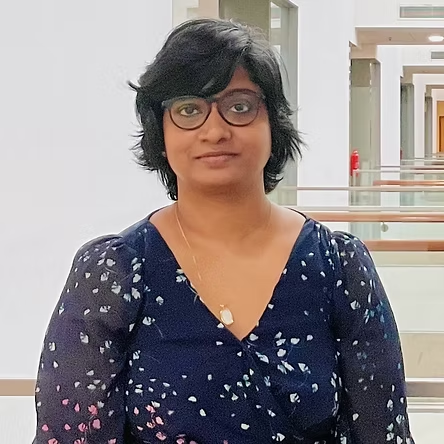
Thivya Kandappu
Singapore Management University
Steering Committee
- Jie Liu (Harbin Inst. of Technology., China)
- Suman Banerjee (Univ. Wisconsin Madison, USA)
- Mahadev Satyanarayanan (Carnegie Mellon Univ., USA)
- Mi Zhang (Michigan State University, USA)
- Ashwin Ashok (Georgia State University, USA)
Technical Program Committee
Technical Program Chair
TPC members
- Yang Liu (University of Cambridge, UK)
TPC members
- Zhenlin An (University of Georgia, USA)
- Tao Chen (Samsung Research America, USA)
- Kaiyan Cui(Nanjing University of Posts and Telecommunications, China)
- Ningning Hou (Macquarie University, Australia)
- Sijie Ji (California Institute of Technology, USA)
- Yang Liu (Nokia Bell Lab, UK)
- Dong Ma (Singapore Management University, Singapore)
- Xiaomin Ouyang (HKUST, Hong Kong)
- Meera Radhakrishnan (University of Technology Sydney, Australia)
- Sougata Sen (BITS Pilani KK Birla Goa campus, India)
- Qijia Shao (HKUST, Hong Kong)
- Vigneshvaran Subbaraju (IHPC, A*STAR, Singapore)
- Yanwen Wang (Hunan University, China)
- Stephen Xia (Northwestern University, USA)
- Huanqi Yang (City University of Hong Kong, Hong Kong)
- Zhimeng Yin (City University of Hong Kong, Hong Kong)
Website/Publicity Chair
Yu Yvonne Wu (University of Cambridge, UK)
Submission Instructions
We invite original research papers that have not been previously published and are not currently under review for publication. All submissions must be provided in PDF format, and follow the formatting guidelines of Ubicomp 2025. Full papers must be no longer than 6 pages (including references and figures), and position papers are limited to 4 pages including references. BodySys follows a single-blinded review process.
Submission Site:
Please submit your work via https://new.precisionconference.com/sigchi and select the BodySys track under UbiComp/ISWC 2025.
If you have any questions, please reach out to Qiang Yang via [email protected]
Program
Location: Room U5(Keynote)/U9(main program), Undergraduate Centre, Otakaari 1, 02150 Espoo
12:15 - 14:00 Lunch
14:00 - 15:00 BodySys Keynote (Joint Workshop Keynote)
Title: From WiFi Sensing to Quantum Sensing: Toward a Ubiquitous Sensing Theory
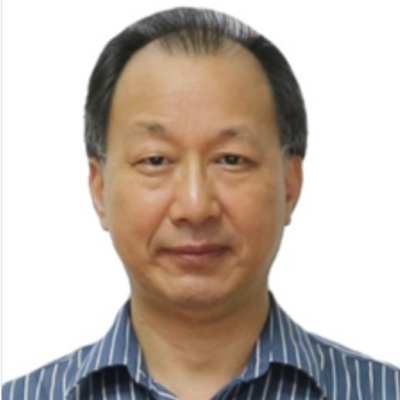
Speaker: Prof. Daqing Zhang
Speaker: Prof. Daqing Zhang
Abstract: WiFi/4G/5G based wireless sensing has attracted a lot of attention from both academia and industry in the last decade. However, most of the work focused on developing effective techniques for a certain application, very few work attempted to explore the fundamental sensing theory and answer fundamental questions such as the sensing model, sensing limit, sensing boundary and sensing quality of WiFi/4G/5G signals. In this talk, I will first introduce the Fresnel zone model we proposed in UbiComp 2016 as a generic theoretic basis for contactless human sensing with WiFi/4G/5G signals, revealing the relationship among the received CSI signal, the distance between the two transceivers, the location and heading of the sensing target with respect to the transceivers, and the environment. Then I will present the Sensing Signal to Noise Ratio (SSNR) as a new metric to inform the sensing limit, sensing boundary and sensing signal quality of WiFi/4G/5G-based human sensing systems. In order to further increase SSNR and push the wireless sensing limit, we explore the Rydberg theory about how the Rydberg atom interacts with RF signals and develop the world first Rydberg quantum sensing system which senses tiny variations of RF signals caused by human activities, showing significant performance increase compared to WiFi or mmWave Radar based sensing systems.
Bio: Daqing Zhang is a Chair Professor at IP Paris and Peking University. His research interests include ubiquitous computing, mobile computing, big data analytics and AIoT. He has published more than 300 technical papers in leading conferences and journals, with a citation of over 33200 and H-index of 94. He developed the OWL-based context model and Fresnel Zone-based wireless sensing theory, which are widely used by pervasive computing, mobile computing, wireless networks and service computing communities. He was the winner of the Ten Years CoMoRea Impact Paper Award at IEEE PerCom 2013, and the Ten Years Most Influential Paper Award at IEEE UIC 2019 and FCS 2023, the Best Paper Award Runner-up at ACM MobiCom 2022, the Distinguished Paper Award of IMWUT (UbiComp 2021), etc.. He is now in the editorial board of ACM IMWUT, ACM TOSN and CCF TPCI. Daqing Zhang is a Fellow of IEEE and Member of the Academy of Europe.
Bio: Daqing Zhang is a Chair Professor at IP Paris and Peking University. His research interests include ubiquitous computing, mobile computing, big data analytics and AIoT. He has published more than 300 technical papers in leading conferences and journals, with a citation of over 33200 and H-index of 94. He developed the OWL-based context model and Fresnel Zone-based wireless sensing theory, which are widely used by pervasive computing, mobile computing, wireless networks and service computing communities. He was the winner of the Ten Years CoMoRea Impact Paper Award at IEEE PerCom 2013, and the Ten Years Most Influential Paper Award at IEEE UIC 2019 and FCS 2023, the Best Paper Award Runner-up at ACM MobiCom 2022, the Distinguished Paper Award of IMWUT (UbiComp 2021), etc.. He is now in the editorial board of ACM IMWUT, ACM TOSN and CCF TPCI. Daqing Zhang is a Fellow of IEEE and Member of the Academy of Europe.
15:05 - 15:20 BodySys Opening
15:20 - 15:45 Best paper candidate session
Session chair: Qiang Yang, University of Cambridge ([email protected])
15:20 - 15:32
Physiogical DDA: Physiological Sensor-based Dynamic Difficulty Adjustment for Enhanced Video Game Engagement
Gwangbin Kim (Gwangju Institute of Science and Technology); Seunghan Kim (Human-centered Intelligent Systems Laboratory); SeungJun Kim (Gwangju Institute of Science and Technology)
15:32 - 15:44
Morphology-Aware HRV Estimation from Wrist PPG in Sedentary Scenarios
Changshuo Hu (Singapore Management University); Manh Pham Hung (Singapore Management University); Dong Ma (Singapore Management University)
15:45 Group photo
16:15 - 17:45 Session 2
Session chair: Thivya Kandappu, Singapore Management University ([email protected])
16:15 - 16:27
CIM-Optimized Convolutional Architectures for Multimodal Body Sensing in Edge Wearables [Online]
Tong Zhang (China Mobile Research Institute); Shuqiong Zhu (China Mobile Research Institute); Ya Wen (China Mobile Research Institute); Weiping Pan (China Mobile Research Institute); Yawen Niu (China Mobile Research Institute)
16:27 - 16:39
NutriLoop: A Cellular Aging-Aware Dietary Feedback Framework via Inflammation and Telomere Association [Online]
Ge Gao (Zhejiang University); Yiming Jin (Juntendo University Graduate School of Medicine); Qiang Yang (University of Cambridge)
16:45 - 17:15 Coffee break
17:15- 17:27
Contact Sensors to Remote Cameras: Quantifying Cardiorespiratory Coupling in High-Altitude Exercise Recovery
Jiankai Tang (Computer Science and Technology Department); Meng Kang (Jilin university); Yiru Zhang (Tsinghua University); Kegang Wang (Tsinghua University); Daniel McDuff (University of Washington); Xin Liu (University of Washington); Yuanchun Shi (Tsinghua University); Yuntao Wang (Tsinghua University)
17:27 - 17:39
Robust PPG Authentication: The Role of Temporal, Individual, and State Variability
Lidia Alecci (Università della Svizzera italiana); Alessandro Zanzi (ETH Zurich); Matias Laporte (Faculty of Informatics, Università della Svizzera italiana); Leonardo Alchieri (Università della Svizzera Italiana); Nouran Abdalazim (Università della Svizzera Italiana); Giovanni De Felice (Università della Svizzera Italiana); Silvia Santini (Università della Svizzera italiana)
17:39 - 17:51
Development of a PPG Sensor Mounting Position Adjustment Device
Atsuhiro Fujii (Ritsumeikan University); Kazuya Murao (Ritsumeikan University)
17:51 - 18:03
A Hybrid Generative Model based on Diffusion and Graphs for Cross-Correlated Synthetic Multivariate Time Series Data [Online]
Julián Jerónimo Bañuelos (Aalto University); Estrid He (RMIT University); Jose Costa-Requena (Aalto University); Flora D. Salim (University of New South Wales); Stephan Sigg (Aalto University)
18:03 - 18:15
Multimodal tactile feedback system for ankle and knee protection during physical exercise: a ubiquitous computing approach [Online]
Yibo Meng (Tsinghua University); ZhiMing Liu (University of Shanghai for Science and Technology); Siyuan Li (Dalian University of Technology); Te Sun (School of control science and engineering)
18:15 - 18:20 Award presentation and closing
Join us on October 13
We look forward to seeing you!