Evolving and Adaptive AI Methodologies for Pre-bunking and Mitigation of Online Information Disorder (EA-AI PMOD)
Join us on September 21
Special Session within the main conference IEEE International Conference on Evolving and Adaptive Intelligent Systems 2026 (IEEE EAIS 2026)
SCOPE
Online information disorder, including misinformation, disinformation, and coordinated
influence operations, represents a major societal challenge in highly dynamic digital
environments, where content, actors, and dissemination strategies continuously evolve.
Traditional content moderation and detection approaches, often based on static models or
post-hoc analysis, struggle to cope with the scale, velocity, and adaptivity of these
ecosystems, and addressing the problem requires intelligent systems capable not only of
detecting harmful content, but also of anticipating, monitoring, and preventing its diffusion
through adaptive and evolving mechanisms.
This Special Session aims to bring together researchers and practitioners developing
AI-based methods to counter online information disorder, with a particular focus on
pre-bunking, early warning, and preventive monitoring. It emphasizes evolving and
adaptive intelligent systems operating in non-stationary environments, where narratives,
communities, and influence strategies change over time, and where continuous learning,
concept drift management, and human-in-the-loop interaction are essential for robust and
trustworthy operation.
The scope of the session includes advanced NLP and AI techniques, such as Large
Language Models, Retrieval-Augmented Generation (RAG), graph-based and Graph-RAG
approaches, and intelligent or multi-agent systems for continuous monitoring and
sense-making. It also covers network and graph analysis methods for studying information
diffusion, community structures, echo chambers, and influencer roles, as well as
knowledge representation and semantic annotation approaches based on ontologies,
knowledge graphs, and formal frameworks to analyze and mitigate online disinformation
events. Contributions addressing explainability, transparency, and actionable decision
support, particularly in support of analysts, policymakers, and platform operators, are
strongly encouraged.
LIST OF MAIN TOPICS
The Special Session includes, but is not limited to, the following topics:
● AI-based methodologies for pre-bunking and prevention of online information
disorder
● Evolving and adaptive intelligent systems for online monitoring and early warning
● Analysis of online discourse, narratives, and framing using NLP and AI
● Large Language Models (LLMs) for misinformation analysis and narrative
understanding
● Retrieval-Augmented Generation (RAG) and Graph-RAG for contextualized
analysis
● Intelligent and autonomous agents for continuous monitoring and sense-making
● Network and graph analysis of information diffusion processes
● Detection of echo chambers, polarization, and community structures
● Identification of influencers, coordinated behaviors, and campaign dynamics
● Semantic annotation and knowledge extraction from online content
● Semantic annotation and knowledge graphs for misinformation analysis
● Formal frameworks and models (e.g., DISARM) for structured representation of
influence operations
● Human-in-the-loop and explainable AI for decision support
● Ethical, trustworthy, and responsible AI for information integrity
LEAD ORGANIZER
Danilo Cavaliere
Università degli Studi di Salerno, Dipartimento di Scienze Aziendali -
Management & Innovation Systems (DISA-MIS)
Management & Innovation Systems (DISA-MIS)
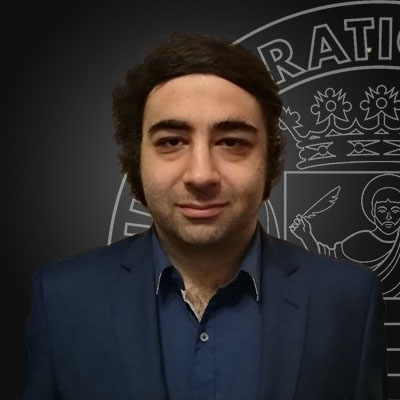
Danilo Cavaliere (IEEE member) received the Master’s degree cum laude in
Computer Science in 2014 and the Ph.D. degree in Computer Science with an
excellent evaluation in 2020 from the University of Salerno, Italy. He is currently a
researcher at the University of Salerno and is involved in the SEcurity and RIghts In
the CyberSpace (SERICS) research project funded by the European Union. He
serves on the editorial board of the Neurocomputing journal and has been a
member of program committees for several international conferences. His research
interests include artificial and computational intelligence, knowledge-based
systems, soft computing, intelligent agents, data mining, remote sensing, online
disinformation, and knowledge discovery, and he has published papers in leading
international journals and conferences in these areas.
Web page: https://docenti.unisa.it/029950/home
Email: [email protected]
Computer Science in 2014 and the Ph.D. degree in Computer Science with an
excellent evaluation in 2020 from the University of Salerno, Italy. He is currently a
researcher at the University of Salerno and is involved in the SEcurity and RIghts In
the CyberSpace (SERICS) research project funded by the European Union. He
serves on the editorial board of the Neurocomputing journal and has been a
member of program committees for several international conferences. His research
interests include artificial and computational intelligence, knowledge-based
systems, soft computing, intelligent agents, data mining, remote sensing, online
disinformation, and knowledge discovery, and he has published papers in leading
international journals and conferences in these areas.
Web page: https://docenti.unisa.it/029950/home
Email: [email protected]
CO-ORGANIZERS
Mariacristina Gallo
Università degli Studi di Salerno, Dipartimento di Scienze Aziendali -
Management & Innovation Systems (DISA-MIS)
Management & Innovation Systems (DISA-MIS)
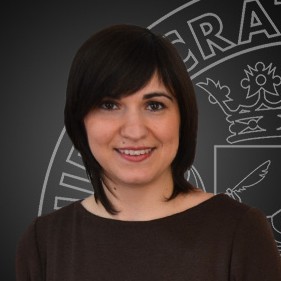
Mariacristina Gallo received the master’s degree in computer science and the Ph.D.
degree in big data management from the University of Salerno, Italy, in 2009 and
2021, respectively. She is currently a Research Fellow with the University of
Salerno. Her research interests mainly focus on computational intelligence methods
to support semantic-enabled solutions and decision-making. Her research activities
regard knowledge extraction and management, context awareness, semantic
information retrieval, and ontology learning.
Web page: https://docenti.unisa.it/032034/home
Email: [email protected]
degree in big data management from the University of Salerno, Italy, in 2009 and
2021, respectively. She is currently a Research Fellow with the University of
Salerno. Her research interests mainly focus on computational intelligence methods
to support semantic-enabled solutions and decision-making. Her research activities
regard knowledge extraction and management, context awareness, semantic
information retrieval, and ontology learning.
Web page: https://docenti.unisa.it/032034/home
Email: [email protected]
Domenico Furno
Università degli Studi di Salerno, Dipartimento di Scienze Aziendali -
Management & Innovation Systems (DISA-MIS)
Management & Innovation Systems (DISA-MIS)
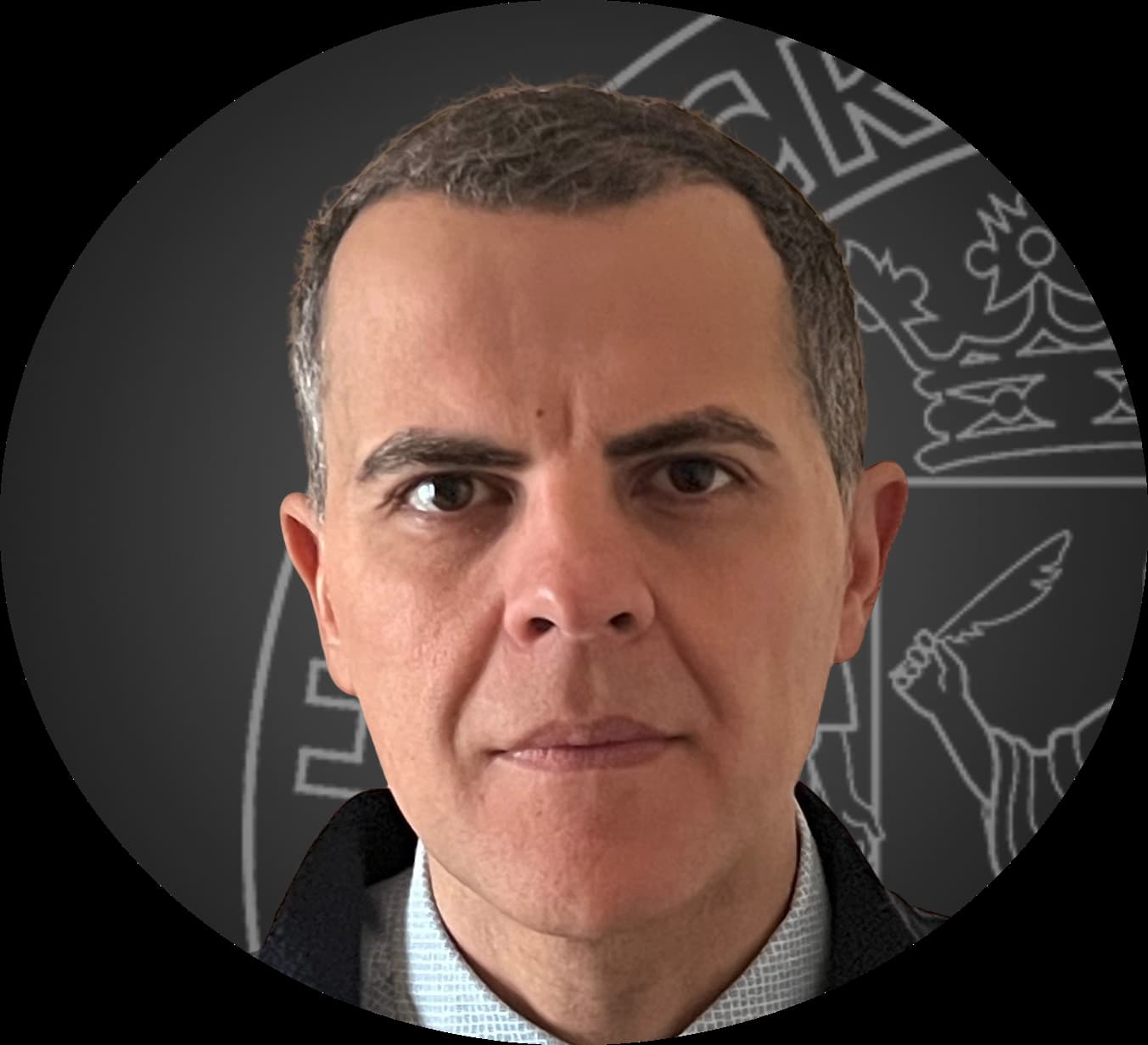
Domenico Furno is a fixed-term researcher (type A) in Computer Science (INF/01)
at the University of Salerno, Italy. He earned his MSc cum laude (2007) and PhD
with excellent evaluation (2013) in Computer Science from the same institution. His
research interests encompass machine learning, data mining, soft computing,
semantic web, and intelligent agent systems, with a particular emphasis on context
and situation awareness and the computational analysis of information disorder,
including misinformation detection and credibility assessment. He has authored
numerous peer-reviewed publications in international conferences and journals, and
contributes to research projects with academic and industry partners. Dr. Furno is
currently involved in the SERICS (Security and Rights in the CyberSpace) national
PNRR research program; within this framework his work focuses on methods for
detecting and modeling disinformation and fake news. He serves as reviewer for
scientific journals and conferences and is a partner in RiAtlas S.r.l., a spin-off
focusing on digital health solutions.
Web page: https://docenti.unisa.it/024198/home
Email: [email protected]
at the University of Salerno, Italy. He earned his MSc cum laude (2007) and PhD
with excellent evaluation (2013) in Computer Science from the same institution. His
research interests encompass machine learning, data mining, soft computing,
semantic web, and intelligent agent systems, with a particular emphasis on context
and situation awareness and the computational analysis of information disorder,
including misinformation detection and credibility assessment. He has authored
numerous peer-reviewed publications in international conferences and journals, and
contributes to research projects with academic and industry partners. Dr. Furno is
currently involved in the SERICS (Security and Rights in the CyberSpace) national
PNRR research program; within this framework his work focuses on methods for
detecting and modeling disinformation and fake news. He serves as reviewer for
scientific journals and conferences and is a partner in RiAtlas S.r.l., a spin-off
focusing on digital health solutions.
Web page: https://docenti.unisa.it/024198/home
Email: [email protected]
Location
University of Pisa, Pisa, Italy
Via Lungarno Antonio Pacinotti, 43, 56126 Pisa (PI)
Via Lungarno Antonio Pacinotti, 43, 56126 Pisa (PI)
Date & Time
September 21, 2026, 12:00 AM, 12:00 AM - September 23, 2026, 12:00 AM
IMPORTANT DATES
- Paper Submission:
March 15, 2026April 7, 2026 - Notification of acceptance: May 15, 2026
- Camera Ready Submissions: June 15, 2026
- Author Registration: June 30, 2026
- Conference Dates: 21-23 September 2026
SUBMISSION
For submission refer to instructions reported on the main website: https://ai.dii.unipi.it/eais-2026-submission/