EWB Southeast Regional Conference 2025
Join us at NC State University on October 11
Resilience In Unity
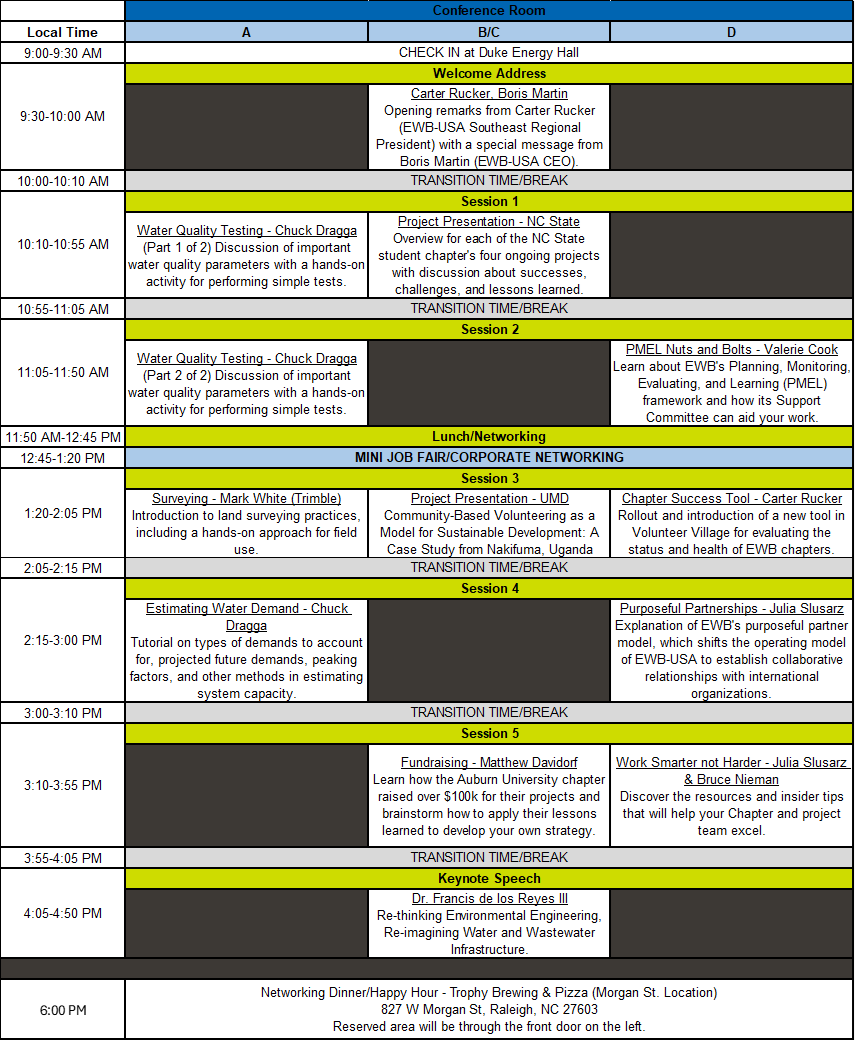
Come join the EWB-USA Southeast Region for our first regional conference in the past decade! We will offer a full day of seminars, demonstrations, hands-on experiences, and networking to connect students, professionals, faculty, and business partners throughout the region. Don't miss our special presentations, including a keynote speech by Dr. De Los Reyes of NC State's Civil, Construction, and Environmental Engineering department.
Admission is FREE and will include lunch, coffee, and snacks throughout the day. Hunt Library offers free weekend parking and is located less than 20 minutes from RDU airport for our long-distance travelers. NC State is located in downtown Raleigh and offers plenty of amenable lodging options.
We hope to see you there as we come together to inspire, connect, and build through our EWB community.
Admission is FREE and will include lunch, coffee, and snacks throughout the day. Hunt Library offers free weekend parking and is located less than 20 minutes from RDU airport for our long-distance travelers. NC State is located in downtown Raleigh and offers plenty of amenable lodging options.
We hope to see you there as we come together to inspire, connect, and build through our EWB community.
Location
Hunt Library - Duke Energy Hall
1070 Partners Way, Raleigh, NC 27606
1070 Partners Way, Raleigh, NC 27606
Date & Time
October 11, 2025
9:30 AM - 5:30 PM
9:30 AM - 5:30 PM
Schedule
Poster Contest
Want to highlight your work for a chance to win a donation to your chapter or free admission to the 2026 National Conference? Enter the poster contest by filling out the form below. Easels will be provided on the day of the event.
https://docs.google.com/forms/d/1L8NmAgyT2Uwth7hnQvbPKgRV0V5RXdpqUK4GvB7vYGA/viewform?edit_requested=true
https://docs.google.com/forms/d/1L8NmAgyT2Uwth7hnQvbPKgRV0V5RXdpqUK4GvB7vYGA/viewform?edit_requested=true
Keynote Speech: Re-thinking Environmental Engineering, Re-imagining Water and Wastewater Infrastructure
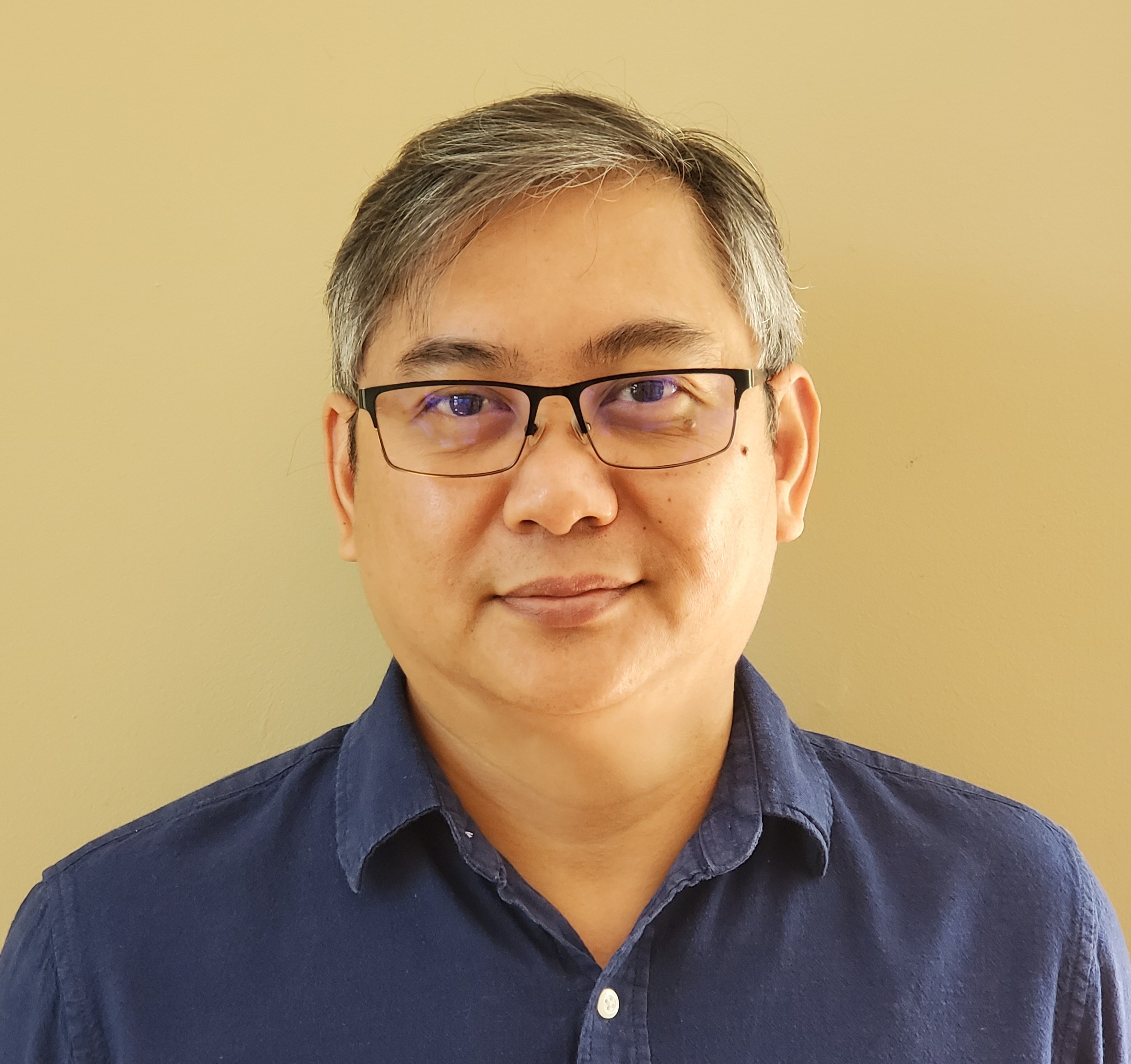
Dr. Francis L. de los Reyes III
https://ccee.ncsu.edu/people/fldelosr/
https://ccee.ncsu.edu/people/fldelosr/
The current infrastructure for water and sanitation (wastewater) in the U.S. and around the world needs fundamental transformation. Globally, billions of people still lack access to clean water and sanitation, a basic human right and a prerequisite for well-being. The century-old centralized treatment and management system model needs to be re-examined as it can be unsustainable, inequitable, and highly vulnerable to disruption. A clear vision of the water and wastewater (sanitation) infrastructure of the future is needed. We posit that this vision should be infrastructure that is sustainable, resilient, and equitable, meeting the needs of all communities, especially those that are underserved. This vision is a departure from the centralized system paradigm, as conventional centralized infrastructure is not a viable solution for many underserved communities. In this vision, household systems, cluster systems, and hybrid systems (mixture of centralized and decentralized) in small communities will play an important role, as a transition is made to this new integrated socio-technical system.
Imagining, designing, and building these systems will require a new kind of environmental engineer: one who is not only strong in fundamental engineering principles, but also comfortable with working with large datasets, and most importantly, working with communities. A new engineering training approach should focus on: (1) Genuine Engagement and Collaborative Design with communities; (2) Technologies at Different Scales to provide safe, reliable, cost-effective, and energy-efficient solutions for different sized systems; and (3) Systems Integration to identify solutions that are sustainable (in terms of cost, environmental impact, and equity), resilient to extreme events, and acceptable and affordable to users.
Imagining, designing, and building these systems will require a new kind of environmental engineer: one who is not only strong in fundamental engineering principles, but also comfortable with working with large datasets, and most importantly, working with communities. A new engineering training approach should focus on: (1) Genuine Engagement and Collaborative Design with communities; (2) Technologies at Different Scales to provide safe, reliable, cost-effective, and energy-efficient solutions for different sized systems; and (3) Systems Integration to identify solutions that are sustainable (in terms of cost, environmental impact, and equity), resilient to extreme events, and acceptable and affordable to users.
Location
Hunt Library - Duke Energy Hall
1070 Partners Way, Raleigh, NC 27606
1070 Partners Way, Raleigh, NC 27606
Duke Energy Hall is located at the northern end of James B. Hunt Jr. Library on the second floor. Parking is free on the weekends, with a parking deck northwest of the library.
Hotels and Accommodations
Here are some accommodations, hotels, and Airbnbs nearby. Hunt Library is located around 10 minutes from the city center, which offers a variety of options. Some of the closest options include:
- TownePlace Suites (3771 Thistledown Drive - 5 min drive): approx. $220 per night
- Holiday Inn Express (3741 Thistledown Drive - 5 min drive): approx. $205 per night
- StateView Hotel (2451 Alumni Drive - 3 min drive): approx. $205 per night
- Camping options: William B. Umstead State Park, Falls Lake, or Jordan Lake