Environmental Justice and Housing Equity:
Building Power for Communities
Building Power for Communities
At this pivotal moment, we are called to remember that civil rights is not history, it is a living fight. We gather in recognition that the foundational struggle for civil rights is at the core of the intersection of fair housing, fair lending, and environmental justice. The same structural forces that deny Black families access to fair housing are also fueling climate vulnerability, predatory lending, and displacement.
Why Now?
Since the Fair Housing Center for Greater Boston dissolved in 2018, our progress has continued to be undermined. We have faced the rolling back of federal funds that support fair housing, fair lending, and environmental justice initiatives, including the ending of the Affirmatively Furthering Fair Housing rule, eliminating the use of disparate-impact liability, attacks on the EPA, and proposed cuts to Housing and Urban Development (HUD). The absence of this critical infrastructure, especially rooted in Black neighborhoods, has left communities vulnerable to financial exploitation, environmental risk, and unchecked development.
This convening is a starting point for rebuilding. By aligning our work under a civil rights framework, we can break out of silos and build collective power across sectors. This means:
Why Now?
Since the Fair Housing Center for Greater Boston dissolved in 2018, our progress has continued to be undermined. We have faced the rolling back of federal funds that support fair housing, fair lending, and environmental justice initiatives, including the ending of the Affirmatively Furthering Fair Housing rule, eliminating the use of disparate-impact liability, attacks on the EPA, and proposed cuts to Housing and Urban Development (HUD). The absence of this critical infrastructure, especially rooted in Black neighborhoods, has left communities vulnerable to financial exploitation, environmental risk, and unchecked development.
This convening is a starting point for rebuilding. By aligning our work under a civil rights framework, we can break out of silos and build collective power across sectors. This means:
- Centering community voices - not university-run models
- Engaging Black philanthropy and private sector accountability
- Pursuing sustainable models not wholly reliant on HUD, but supported by community trust and resources
- Asserting that budgets are moral documents, and fair housing is a right, not a program
Location
Mechanics Hall
321 Main Street Worcester, Massachusetts 01608
321 Main Street Worcester, Massachusetts 01608
Date & Time
October 21, 2025, 10:00 AM
Honoring the Legacy of Robert L. Terrell, III
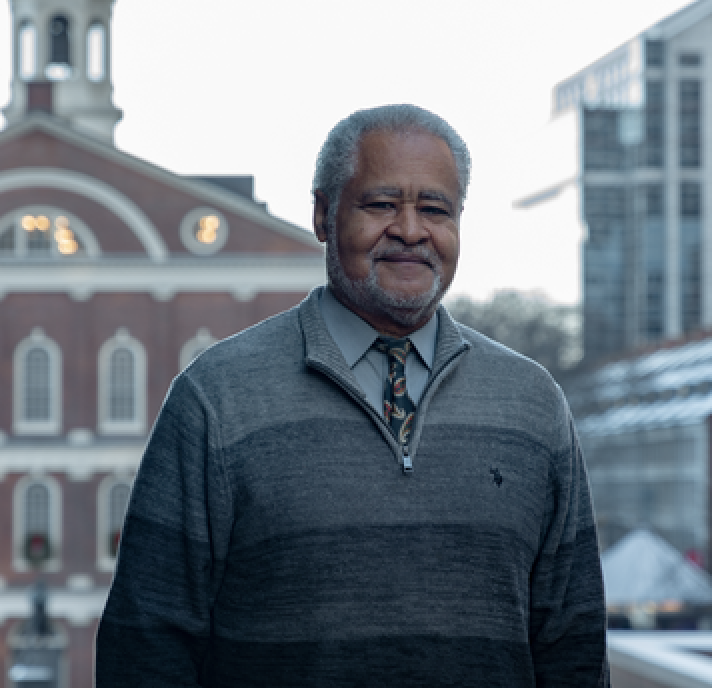
This event is dedicated to the memory and enduring legacy of Robert “Bob” L. Terrell, III (1951–2025) — a champion for civil rights, fair housing, and environmental justice in Boston. Bob was a tireless advocate, educator, and leader whose work shaped policies and programs that continue to dismantle structural barriers to equity in housing, transportation, and urban development.
From his early days growing up in the South End of Boston to his final role as Executive Director of Boston’s Office of Fair Housing and Equity under Mayor Michelle Wu, Bob embodied what it means to serve with purpose and integrity. He led with intellect, humility, and a deep belief in justice as a “sacred trust.” His groundbreaking work included helping establish Boston’s first-in-the-nation fair housing zoning ordinance and advancing racial equity across housing institutions.
Bob’s influence lives on in the communities he empowered, the students he taught, and the policies he helped shape. We are honored to walk in the path he helped blaze and commit ourselves to continuing the work he so passionately advanced.
Core Themes:
- Civil Rights is at the Core: The same systems that created redlining now shape climate vulnerability and financial harm. Civil rights advocacy must expand to confront these modern manifestations of inequality.
- Community-Based Power: The next generation of housing and environmental justice work must be led by the communities most impacted.
- Economic Justice & Accountability: With high rates of foreclosure, bank mergers, and predatory practices, we must demand that financial institutions contribute to repair and redress through tools like community benefits agreements and reinvestment commitments. We must also have an accountability system in place to ensure transparency.
- Environmental Justice: The climate crisis hits hardest where civil rights have been historically denied. From flood zones to heat islands, environmental risks map directly onto patterns of racial exclusion.
Goals:
- Reignite the vision for a full-service Fair Housing Center based in a Black neighborhood—independent of universities and centered in the community.
- Build a shared vision and regional strategy that unites stakeholders across fair housing, lending, and environmental justice.
- Catalyze support for a Fair Housing Trust Fund and push for policy tools like community benefit agreements during bank mergers.
- Illustrate how developers and financial institutions are encroaching on civil rights protections, and how we can push back.
- Elevate work like Dr. James Jennings’ white paper, Environmental Justice, Fair Housing, and Fair Lending: Towards a Strategic Collaborative Model, as a foundation for collective learning.
Keynote Speaker
Rahsaan D. Hall, Esq.
President & CEO, Urban League of Eastern Massachusetts
Rahsaan D. Hall serves as President & CEO of the Urban League of Eastern Massachusetts (ULEM), where he leads the historic 106-year old organization dedicated to dismantling systemic barriers and advancing racial and economic equity across Eastern Massachusetts. Since assuming leadership in 2023, Hall has guided ULEM to expand its programming across its five core pillars—employment, education, health, housing, and justice. Under his vision, ULEM has expanded AI training through its MSIMBO+ Coding Academy, forged clean-energy career pathways, created career pathways for survivors of domestic violence, and enhanced voter access alongside mental health initiatives.
Prior to ULEM, Hall directed the Racial Justice Program at the ACLU of Massachusetts, where he spearheaded legislative advocacy on racial justice matters, litigation, and community engagement campaigns to challenge racial profiling, promote police accountability, and safeguard voting rights.
Schedule and Sessions
9:00 AM
Coffee and Conversation
10:00 AM
Opening Plenary
“Civil Rights in This Time and Place: Fair Housing, Fair Lending, Public Health and Environmental Justice”
Dwaign Tyndal, Executive Director - (ACE)
Dwaign Tyndal, Executive Director - (ACE)
10:35 AM
Overview of Foundational Research
"Environmental Justice, Fair Housing, and Fair Lending Towards a Strategic Collaborative Model- June 2024"
Dr. James Jennings - Author, Professor Emeritus Urban and Environmental Policy and Planning-Tufts University
Dr. James Jennings - Author, Professor Emeritus Urban and Environmental Policy and Planning-Tufts University
10:50 AM
Panel 1: Fair Housing After 208 - What we've lost, and what do we need now?
Since 2018, rollbacks at the federal level have challenged long-standing fair housing protections leaving Massachusetts communities to navigate growing disparities with fewer tools. This panel examines the statewide impacts of weakened enforcement, explores where fair housing access has suffered most, and asks what Massachusetts must do next. From zoning laws to lending practices, we'll explore what’s broken, what’s working, and what bold action is needed now to advance equity and justice in housing.
Whitney Demetrius, State Director of Fair Housing - Massachusetts Executive Office of Housing and Livable Communities (EOHLC) - Moderator
Nadine Cohen, Long time Fair Housing, Civil Rights and Consumer Attorney and Advocate, Founding Board Member of Fair Housing Center of Greater Boston
David Harris, Managing Director Emeritus - Charles Hamilton Houston Institute for Race and Justice at Harvard and former Director of the Fair Housing Center of Greater Boston
Amy Stitely, Undersecretary for Strategy & Climate - Massachusetts Executive Office of Housing & Livable Communities
Whitney Demetrius, State Director of Fair Housing - Massachusetts Executive Office of Housing and Livable Communities (EOHLC) - Moderator
Nadine Cohen, Long time Fair Housing, Civil Rights and Consumer Attorney and Advocate, Founding Board Member of Fair Housing Center of Greater Boston
David Harris, Managing Director Emeritus - Charles Hamilton Houston Institute for Race and Justice at Harvard and former Director of the Fair Housing Center of Greater Boston
Amy Stitely, Undersecretary for Strategy & Climate - Massachusetts Executive Office of Housing & Livable Communities
11:55 AM
Networking Lunch
1:00 PM
Panel 2: Building a Regional Civil Rights Infrastructure (across fair housing, fair lending, environmental justice)
Civil rights violations don’t stop at city lines and our solutions shouldn’t either. This panel explores what it would take to build a truly regional civil rights infrastructure across housing, lending, and environmental justice in Massachusetts and beyond. What governance models, partnerships, and enforcement tools are needed to address systemic inequities across municipalities? How can we ensure community leadership, cross-sector accountability, and long-term sustainability?
Panelists will examine how local governments, state agencies, and regional planning bodies can work together to build a shared infrastructure that is responsive, community-governed, and powerful enough to take on structural injustice at scale. From data systems and funding to workforce development and movement building, we’ll explore the practical steps and bold visions needed to make regional civil rights enforcement real.
John Smith, Executive Director - Dudley Street Neighborhood Initiative (DSNI)- Moderator
Dr. Ramon Borges-Mendez, Associate Professor Sustainability and Social Justice- Clark University
Megan Haberle, Policy Director for the Initiative on Land, Housing, and Legal Reform - Boston College
Danielle Sommer Kieta, Lead Consultant - Boston Tenant Coalition AFFH Zoning Work, Policy Director - Homes for All
Panelists will examine how local governments, state agencies, and regional planning bodies can work together to build a shared infrastructure that is responsive, community-governed, and powerful enough to take on structural injustice at scale. From data systems and funding to workforce development and movement building, we’ll explore the practical steps and bold visions needed to make regional civil rights enforcement real.
John Smith, Executive Director - Dudley Street Neighborhood Initiative (DSNI)- Moderator
Dr. Ramon Borges-Mendez, Associate Professor Sustainability and Social Justice- Clark University
Megan Haberle, Policy Director for the Initiative on Land, Housing, and Legal Reform - Boston College
Danielle Sommer Kieta, Lead Consultant - Boston Tenant Coalition AFFH Zoning Work, Policy Director - Homes for All
2:05 PM
Open Discussion
An open conversation on fair housing, fair lending, public health and environmental injustice in Massachusetts and across the region, and what bold, community-driven solutions could look like. Audience participation encouraged.
Tristan Thomas, Director of Policy - Alternatives for Community and Environment (ACE)- Moderator
LaQuinte Campbell, Special Projects Consultant - Alternatives for Community and Environment (ACE) - Moderator
Tristan Thomas, Director of Policy - Alternatives for Community and Environment (ACE)- Moderator
LaQuinte Campbell, Special Projects Consultant - Alternatives for Community and Environment (ACE) - Moderator
3:00 PM
Special Keynote Speaker
Rahsaan D. Hall, Esq.
President & CEO, Urban League of Eastern Massachusetts
President & CEO, Urban League of Eastern Massachusetts
3:35 PM
Closing Remarks
Dwaign Tyndal, Executive Director - (ACE)
Whitney Demetrius, State Director of Fair Housing - Massachusetts Executive Office of Housing and Livable Communities (EOHLC)
Dr. James Jennings - Author
Whitney Demetrius, State Director of Fair Housing - Massachusetts Executive Office of Housing and Livable Communities (EOHLC)
Dr. James Jennings - Author
Location
Mechanics Hall
321 Main Street Worcester, Massachusetts 01608
321 Main Street Worcester, Massachusetts 01608
Directions and Parking
From Massachusetts Turnpike (I-90):
Take Exit 90 at Auburn to I-290 East OR Exit 94 to Rte 146 North to Rte 290 East
From I-95 (Rhode Island):
Take I-95 North to Rte 146. Take Rte 146 North to I-290 East
From I-95, I-93 or Route 3 (New Hampshire):
Travel South to I-495. Take I-495 South to I-290 West
From I-290:
Take I-290 to Exit 20 (MLK Jr. Blvd.). From 290E, turn left onto MLK Jr. Blvd.
From I-290W, turn right.
To Main Street Entrance: At Main Street, turn left. Mechanics Hall is on the left at 321 Main Street. Parking on Main Street, Exchange Street, Waldo Street, Commercial Street, Central Street.
To Waldo Street Entrance: At Major Taylor Blvd, turn left. At Foster Street, turn right. Make the 2nd right onto Waldo Street. Mechanics Hall is on the left.
*Please note: The Waldo Street entrance (pictured above) is wheelchair accessible, with direct access to elevators.
Take Exit 90 at Auburn to I-290 East OR Exit 94 to Rte 146 North to Rte 290 East
From I-95 (Rhode Island):
Take I-95 North to Rte 146. Take Rte 146 North to I-290 East
From I-95, I-93 or Route 3 (New Hampshire):
Travel South to I-495. Take I-495 South to I-290 West
From I-290:
Take I-290 to Exit 20 (MLK Jr. Blvd.). From 290E, turn left onto MLK Jr. Blvd.
From I-290W, turn right.
To Main Street Entrance: At Main Street, turn left. Mechanics Hall is on the left at 321 Main Street. Parking on Main Street, Exchange Street, Waldo Street, Commercial Street, Central Street.
To Waldo Street Entrance: At Major Taylor Blvd, turn left. At Foster Street, turn right. Make the 2nd right onto Waldo Street. Mechanics Hall is on the left.
*Please note: The Waldo Street entrance (pictured above) is wheelchair accessible, with direct access to elevators.
Mechanics Hall does not have on-site parking, but there are many parking lots and garages in walking distance to the Hall.
There are also limited on-street parking spaces available on Main Street and Waldo Street.
As of December 2021, The City of Worcester has implemented a new 'pay-by-plate' and 'pay-by-phone' parking system. Many of these parking spaces are in proximity to Mechanics Hall.
For a helpful guide to parking in the City of Worcester, visit: Worcester Parking (parkworcester.com).
There are also limited on-street parking spaces available on Main Street and Waldo Street.
As of December 2021, The City of Worcester has implemented a new 'pay-by-plate' and 'pay-by-phone' parking system. Many of these parking spaces are in proximity to Mechanics Hall.
For a helpful guide to parking in the City of Worcester, visit: Worcester Parking (parkworcester.com).
Join us on October 21
For event questions, please contact
LaQuinte Campbell [email protected]
LaQuinte Campbell [email protected]