THE COUPLE WITH THE PITCHFORK: American Gothic from Easel to Icon
Join us on November 12 for the Iowa City Book Launch
Join us for the launch of the definitive cultural history book written by preeminent art historian Wanda M. Corn. Published by Princeton University Press, this richly illustrated work serves as the ultimate capstone to Corn’s five-decade career studying the legacy of Grant Wood’s 1930 masterpiece, American Gothic. It explores how and why Grant Wood’s couple has become one of the most recognized and reworked twosomes in all of image history.
Admission is free. Seating is limited and is strictly first-come, first-served. Books will be available for purchase from Prairie Lights at ICON.
The evening will begin at The James Theatre with an author talk and Q&A followed by a reception and book signing at ICON (one block west).
The event is organized by the University of Iowa's Grant Wood Art Colony, the James P. Hayes Foundation, and ICON.
We would like to thank Leslie Nolte and ICON for graciously donating the James Theater and ICON for this event. For those who are unfamiliar, ICON is a premier performing and visual arts high school in Iowa City, offering dance, theater, and visual arts programs. We are excited for you to tour their beautiful facilities while you get your book signed and enjoy refreshments with us!
Please note: Registrant and guest information may be shared among this event's organizers for event planning and programming.
Location
The James Theatre - 213 N. Gilbert St. Iowa City; and ICON - 123 N. Linn St., Iowa City (one block away from each other)
Date & Time
November 12, 2026,
5:30 PM -Author Talk / Q&A (at The James Theatre)
6:30 PM - Reception & Book Signing (at ICON)
5:30 PM -Author Talk / Q&A (at The James Theatre)
6:30 PM - Reception & Book Signing (at ICON)
"Art historian Corn expertly uses Grant Wood’s 1930 painting American Gothic as a lens through which to explore artistic and cultural debates. . . . The author draws on a dazzlingly diverse range of homages to and parodies of the painting . . . to unpack how the painting has served as a site for American identity to be negotiated and remade. It’s an illuminating, wide-ranging examination of the many afterlifes of a classic image." - Publisher’s Weekly
"In this penetrating, deeply researched study, [Wanda Corn] expands on work she began in 1981, explicating the image, recounting [Grant] Wood’s personal and professional life, and tracing the painting’s reception and transformation from 1930 to the present. . . . A fresh, engaging look at an iconic artwork." - Kirkus Reviews starred review
“The Couple with the Pitchfork culminates Wanda Corn’s career-spanning research into Grant Wood and his most famous painting. She thoroughly grounds readers in the creation and reception of American Gothic, deftly weaving together Wood’s artistic practice and the many cultural factors that impacted its reception. From artwork to icon, Corn explores how the image became so famous and the subject of ongoing artistic reimagining and visual culture appropriation. A must-read!” - Sarah Kelly Oehler, Art Institute of Chicago
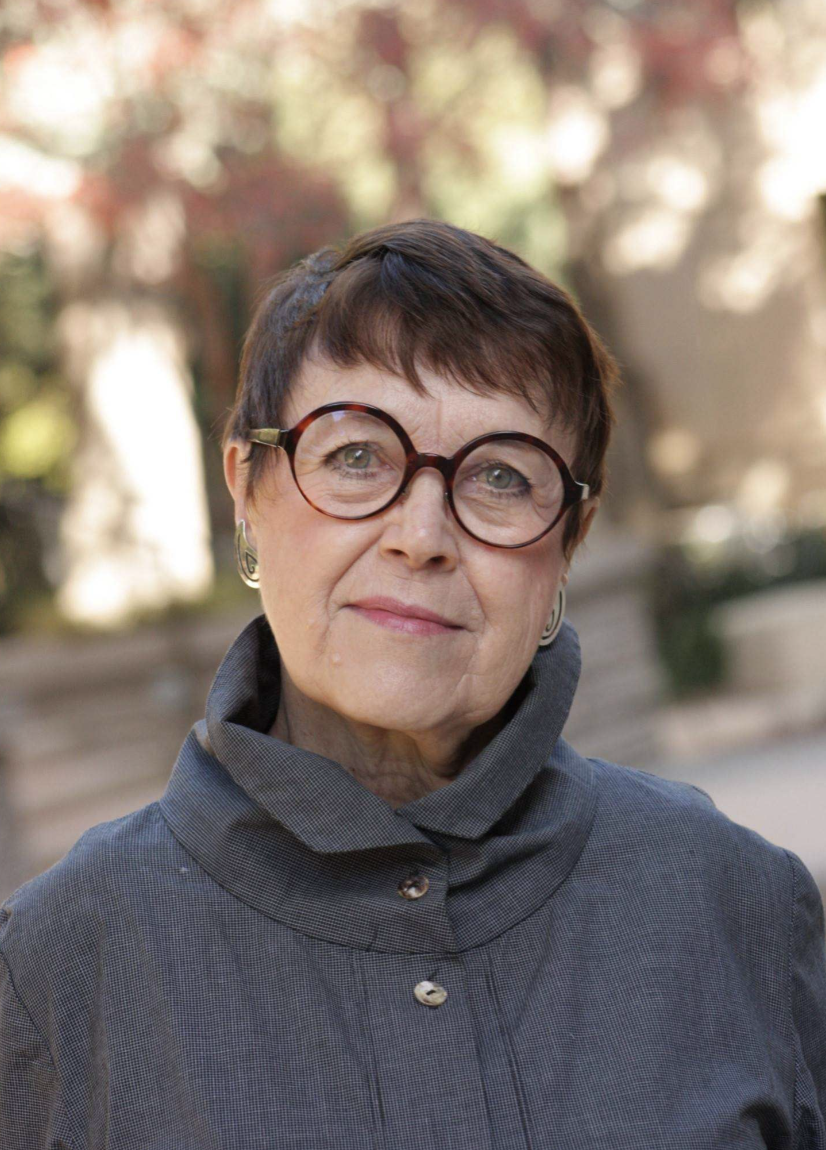
About Wanda M. Corn
an American art historian, cultural scholar, and the Robert and Ruth Halperin Professor Emerita in Art History at Stanford University
Wanda Corn is a leading historian of American art whose scholarship spans the Gilded Age, early twentieth-century modernism along the Atlantic rim, and the artists known as regionalists. She named and defined the American Tonalist movement and revived interest in overlooked figures such as Grant Wood and the women muralists of the 1893 World’s Fair. Bridging the academy and the museum, her books have accompanied major exhibitions. Her traveling Georgia O’Keeffe show broke new ground by pairing the artist’s work with her clothing and photographs.
Corn joined Stanford in 1980 as its first permanent appointee in American art history. She later chaired the Department of Art and Art History, directed the Stanford Humanities Center, and held the Halperin Professorship until retiring in 2008. Her honors include the Archives of American Art’s Fleischman Award for Scholarly Excellence, a Lifetime Achievement Award from the Women’s Caucus for Art, and the College Art Association’s Distinguished Teaching of Art History Award. She chairs the Advisory Committee for Historic Artist Homes and Studios.
She is the author of The Great American Thing: Modern Art and National Identity, 1915–1935; Women Building History: Public Art at the 1893 Columbian Exposition; and Georgia O’Keeffe: Living Modern. Her latest book, The Couple with the Pitchfork: American Gothic from Easel to Icon, caps five decades of research on Grant Wood’s famous painting. She lives, writes, and gardens on Cape Cod.
Read her full biography here.