Knowing who attended your event is important, but event organizers require much more nuanced information to truly evaluate an event's success. The problem is, many tools simply track the number of attendees without offering any actionable insights.
Event planners need a solution that goes beyond attendance numbers to monitor participation, engagement, and no-shows—especially if they're running online events.
This article explores five of the most popular and powerful event attendance tracking tools on the market today, diving into the key features, pros, cons, and pricing of each. Gaining insight into these options can help you choose the one that provides all the data you need to build better events in the future.
Why accurate attendance tracking matters
Accurate event attendance tracking isn’t just about knowing how many people showed up—though that is obviously important. It's also about gathering insights that improve planning, drive better decision-making, and enhance marketing efforts for future events.
Here’s how smarter attendance tracking helps event promoters.
Measure event success
Raw attendance numbers are a core metric for evaluating whether or not your event met its goals. They help you assess basic engagement and refine your strategy.
For instance, if sign-ups are strong but actual attendance is low, you might decide to implement paid ticketing to increase buyer commitment.
Improve future planning
Understanding attendance patterns, such as when people show up or leave, allows organizers to optimize aspects of event planning, such as venue selection, traffic flow, and staff scheduling.
Enhance attendee experience
Knowing when and where attendees engage most (or least) can help you refine programming, session layouts, and networking opportunities to improve future events.
Boost return on investment and access more sponsorships
Sponsors and other stakeholders investing money into an event want hard numbers on what they’re receiving in return. Accurate attendance data provides valuable insights into event reach, engagement, and ROI, making it easier to secure future sponsorships.
Streamline follow-ups and lead nurturing
Stronger attendance tracking lets event organizers send more personalized follow-ups, post-events offers, and surveys to capture feedback for future events.
Ensure compliance and security
Some events require strict attendance verification for regulatory or security reasons. Reliable tracking helps ensure compliance with industry standards and internal policies.
Key challenges in tracking event participation
Event organizers often assume that tracking attendance is as simple as checking people in at the entry point.
The truth is that several common challenges can make it difficult to collect accurate, actionable data, including:
Incomplete or inaccurate check-ins: Manual check-in processes are prone to errors, and some attendees inevitably forget to self-check in. Attendees arriving late or leaving early can also create gaps in attendance records if they aren't tracked correctly.
No-shows and walk-ins: Not everyone who registers will attend, and some attendees may show up without prior registration. Without a reliable tracking system, organizers may struggle to account for these fluctuations.
Multi-session and multi-day events: Trade shows, conferences, and multi-day festivals add another layer of complexity to the mix, as they require attendance tracking across multiple locations or points in time.
Lack of real-time insights: Many event attendance tracking tools don’t go deep enough. They tell you who turned up but not at what time or for how long, making it hard to use this data for event logistics and staff allocation.
Failure to measure engagement: Similarly, many tools track attendance but don’t monitor engagement, such as comments or survey participation for online events.
5 Best software solutions for tracking event attendance
These five software platforms provide a variety of important event planning tools, wrapping attendee tracking into a comprehensive event management platform.
1. EventCreate
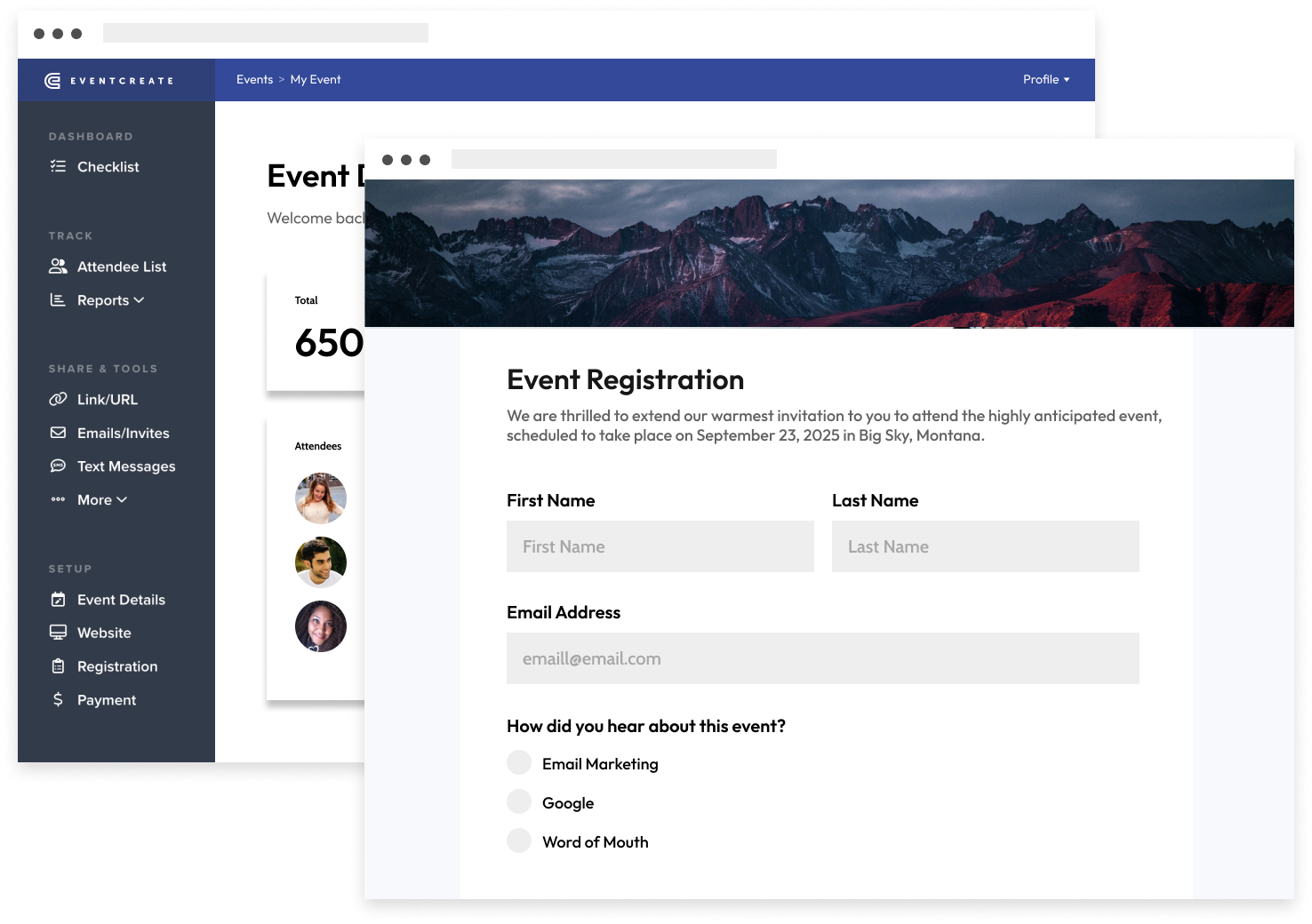
A screenshot of EventCreate’s event registration form (Image source)
EventCreate is our all-in-one event management software.
It comes stacked with features for busy planners looking to design immersive experiences for event attendees, from instant check-ins and live tracking dashboards to post-event analytics.
No more managing spreadsheets or third-party tools—it’s all in EventCreate.
Features:
Custom event registration forms: EventCreate customers can use pre-built registration forms or create their own with custom fields and questions.
Event check-in mobile app: Our built-in QR scanning app helps streamline check-in and track attendance for in-person events. Every ticket sold with EventCreate comes with its own personalized QR code.
Attendee management functionality: EventCreate helps you maintain a detailed list of all invitees and their RSVP statuses—attending, not attending, or no response.
Event website builder: Our comprehensive event app also has a built-in website designer with dozens of professional templates and a user-friendly drag-and-drop interface.
Built-in ticketing: You can sell tickets to your event, offer personalized coupons, and even promote add-on items like event merch and VIP passes.
Seating chart builder: Once you’ve checked attendees in, our custom seating chart makes it easy for them to find their seats quickly.
Pros:
EventCreate simplifies event planning by reducing manual tasks and consolidating everything into one intuitive platform.
Integrated ticketing and promotion tools help maximize attendance and revenue without relying on third-party services.
We’ve got options to suit all budgets, helping you maximize event ROI.
EventCreate helps you deliver a consistently positive attendee experience with a professional event website, seamless registration, and a simplified check-in system.
Cons:
Pricing:
Pricing for EventCreate starts at just $29 per month.
2. Cvent
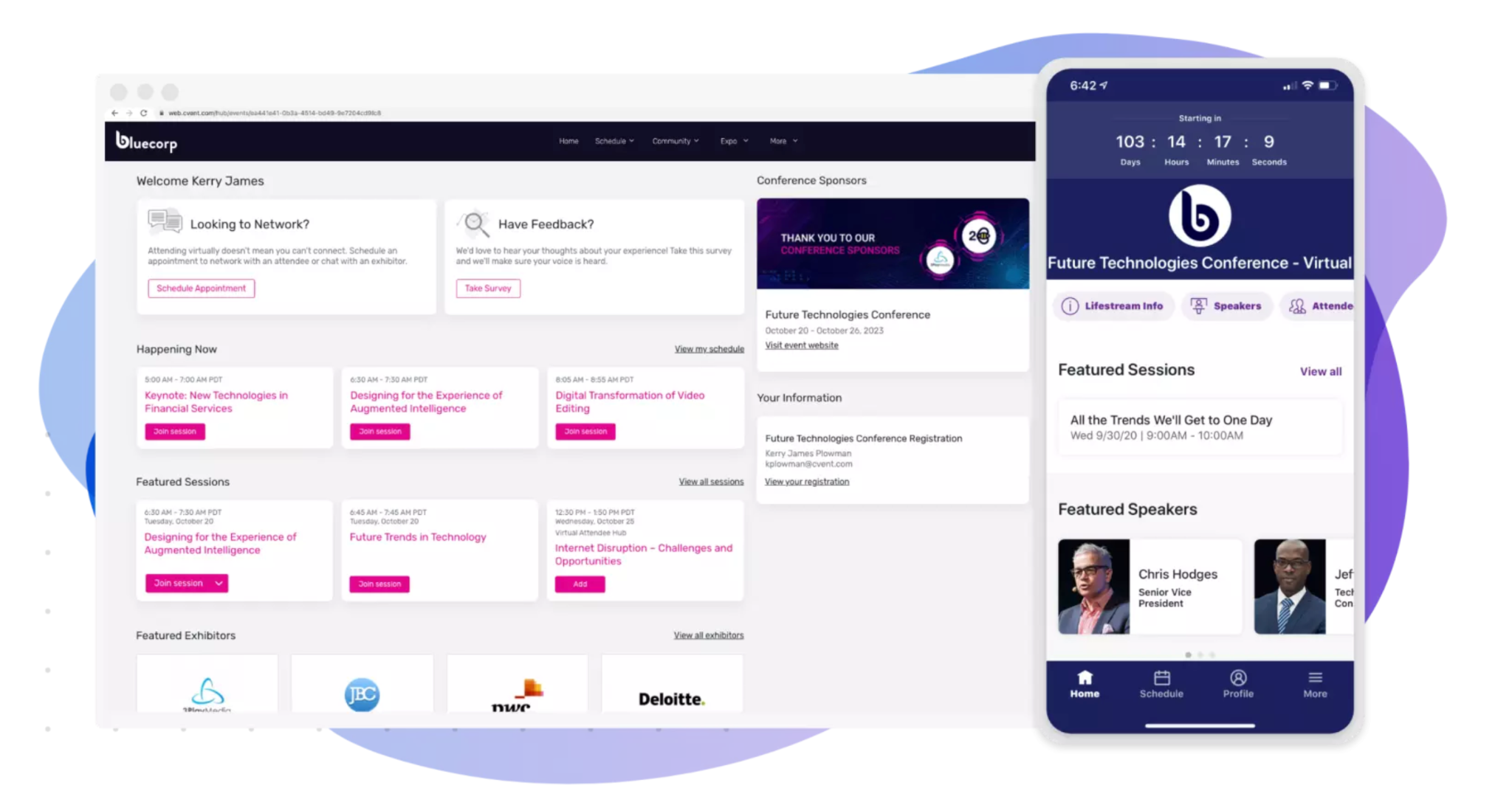
A screenshot of Cvent’s reporting tools (Image source: Cvent website)
Cvent is a comprehensive event management platform with strong attendee engagement and attendance tracking features.
Features:
Session attendance tracking: Cvent offers tools to monitor session participation, helping organizers understand attendee engagement and session popularity. This data can help planners design more successful events in the future.
Virtual attendance tracking: For virtual events like webinars and online conferences, Cvent's Attendee Hub tracks participation metrics, offering insights into attendee engagement during online sessions.
Real-time reporting: Cvent offers real-time data on attendee activities, such as meetings scheduled during networking events or interactions at exhibitors' booths, which it tracks using RFID technology.
Pros:
Cvent offers comprehensive attendee tracking features that go beyond simply measuring who turned up.
The platform integrates seamlessly with various CRM and marketing tools, making data sharing much easier.
Cvent also integrates helpful event planning tools like venue and vendor sourcing as well as speaker management.
Cons:
Cvent is a complex product, and its steep learning curve can overwhelm new users.
It's one of the more expensive event management platforms available.
Pricing:
While Cvent doesn’t explicitly state how much it charges, Vendr notes Cvent buyers pay between $4,740 and $50,296 a year for the platform.
3. Bizzabo
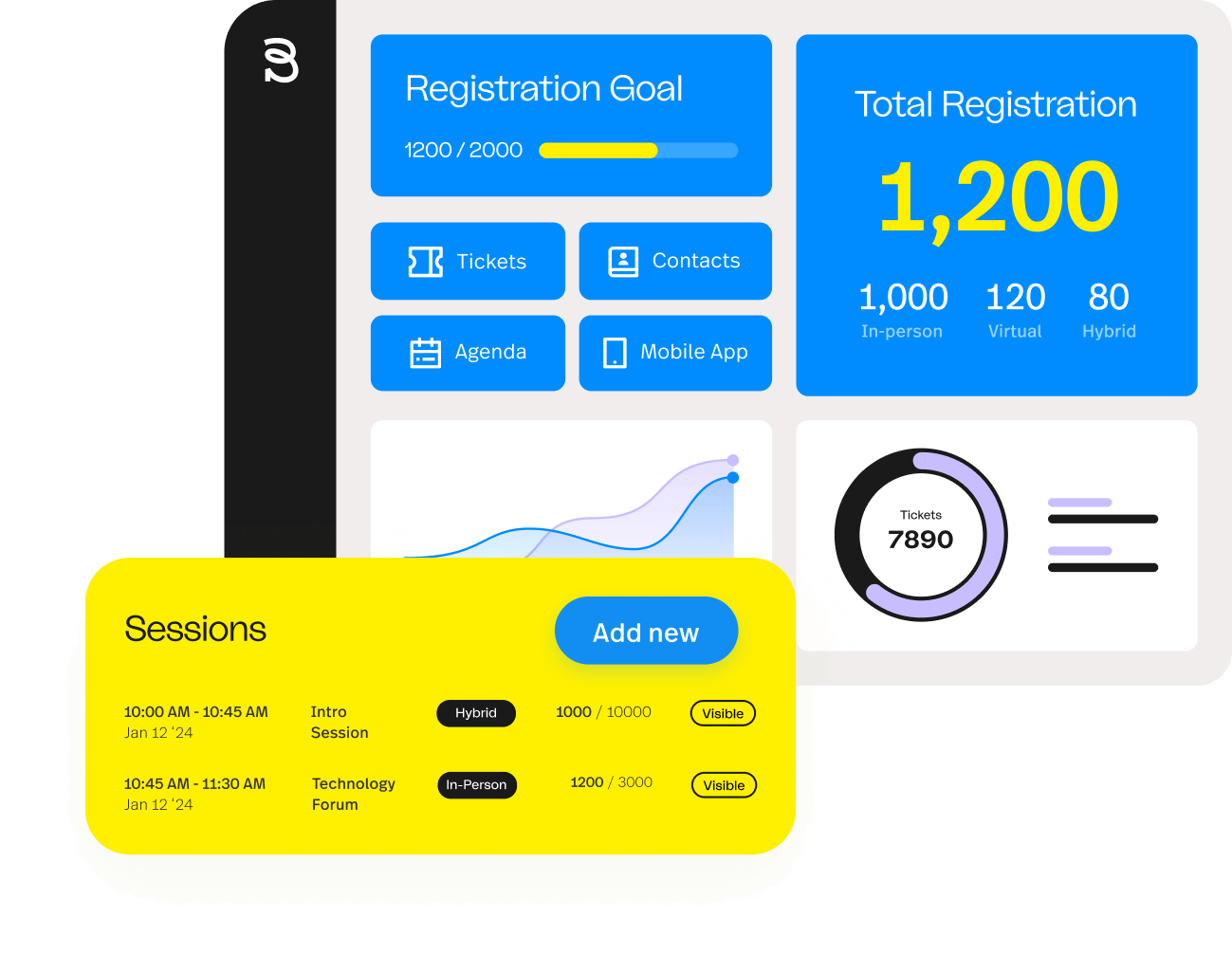
An image from Bizzabo that shows event attendance and engagement (Image source: Bizzabo website)
Bizzabo is an event management platform designed specifically for event planners hosting B2B conferences.
Features:
Onsite check-in and badge printing: Event staff can use Bizzabo’s Onsite Check-In app to process arrivals with QR codes or RFID badge scanning, reducing wait times and improving event flow.
SmartBadge technology: With the Klik SmartBadge, attendees can check in quickly and exchange contact details using wearable technology. This helps event organizers track session participation as well as engagement.
Lead capture and exhibitor engagement tools: Bizzabo’s lead retrieval features help exhibitors and sponsors capture and qualify leads at conferences, maximizing ROI for vendors.
Pros:
Bizzabo offers a diverse feature set tailored specifically to B2B conference organizers.
Tools like live polling and AI-powered matchmaking provide insights into engagement.
The platform connects with plenty of major CRM, marketing automation, and webinar tools for efficient workflows.
Bizzabo offers both real-time and post-event analytics.
Cons:
Bizzabo is expensive compared to other more budget-friendly event platforms.
Some users report that design customization options for event websites and registration pages are somewhat limited compared to alternatives.
Pricing:
Bizzabo’s Event Experience OS costs $499 per user per month, billed annually, with a three-user minimum. That’s a minimum investment of nearly $18,000, and you’ll pay extra for the Klik SmartBadge wearables.
4. Whova
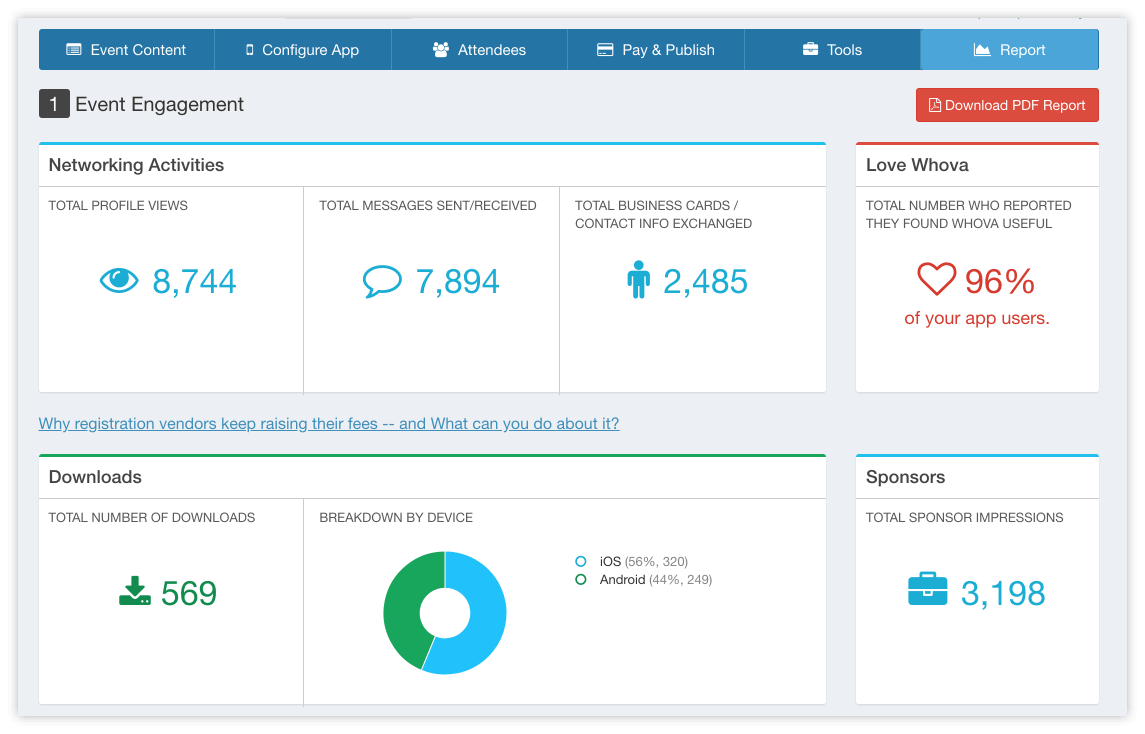
A screenshot of Whova’s event engagement dashboard (Image source: Whova website)
Whova is a well-rounded event management app with features that support both in-person and online events.
Features:
Enrollment capacities: Organizers can set limits for sessions, preventing overcrowding and ensuring a balanced distribution of attendees. They can also create waitlists for fully booked sessions.
Session popularity tracking: Whova provides real-time insights into which sessions are drawing the most interest, helping with future planning and room allocation.
Self-check-in: Attendees can check themselves in by scanning a QR code, which can reduce wait times.
Engagement level reporting: Post-event analytics provide detailed engagement reports, helping organizers measure session effectiveness and attendee participation.
Pros:
Whova improves attendee accountability by ensuring only registered participants have access to sessions.
Automated reminders and notifications help reduce no-show rates and keep attendees engaged.
The platform offers flexible check-in options, including QR codes, manual confirmation, and staff-assisted check-ins.
Cons:
Less tech-savvy attendees may struggle with self-check-in and require additional support.
Attendees who forget to check in manually may not be counted, leading to inaccurate attendance data.
Pricing:
Whova doesn’t advertise pricing. Event organizers looking to use the platform must request a custom quote.
5. Stova
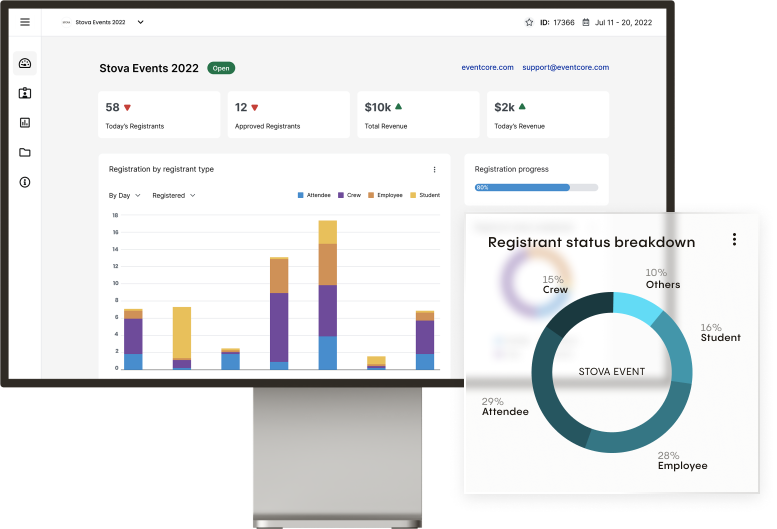
Image from Stova showing the platform’s reporting capabilities (Image source: Stova website)
Stova is an event management platform designed to meet the complex event planning needs of enterprise organizations. It includes advanced features such as AI-powered networking tools and comprehensive content management systems.
Features:
Touchless check-in and badging: Stova is one of the few platforms that offers NFC (near field communication)-enabled, contactless check-in processes and on-site badge printing, enhancing attendee safety and reducing wait times.
Real-time attendance tracking: Stova has live dashboards with real-time attendee data, allowing organizers to monitor session participation and overall event traffic.
AI-powered engagement analytics: The platform uses AI to assess attendee behavior, such as session participation and networking activity, providing deeper engagement insights.
Pros:
Stova can consolidate attendance data across multiple events, helping enterprise companies analyze trends and optimize future planning.
Stova’s digital check-in and badge-scanning features ensure only registered attendees can access specific sessions.
Cons:
Stova has a powerful and expansive feature set, which may make it overly complex for smaller events with simpler attendance needs.
Attendees unfamiliar with NFC check-ins may require additional guidance or support on-site.
Pricing:
Stova doesn’t advertise pricing on its website, but both Capterra and GetApp note that Stova uses a per-registration pricing model and requires a minimum investment of $10,000.
How EventCreate provides a seamless tracking experience
Accurate event attendance tracking is essential for measuring success, planning better future events, and improving attendee engagement. While many tools offer basic check-in functionality, the best platforms go beyond that—delivering real-time insights, engagement tracking, and seamless event management.
EventCreate is a powerful and cost-effective solution for small to mid-sized event planners. Our all-in-one platform provides comprehensive features like QR code scanning, built-in ticketing, mobile-friendly registration forms, and insightful event reporting. Designed to streamline event management, EventCreate simplifies every aspect of planning and execution to help ensure successful events.
Try EventCreate for free today.